Reminder for Michigan Limited Liability Companies on Upcoming Filing Deadline. Stay in Good Standing and Maintain your Corporate Formalities.

Happy #ThrowbackThursday.


Some (maybe all of you) may be wondering about my choice of including this photo – 2016-09-22-07-53-56it is me, years ago, dressed as Sparty for the MSUvUofM game. I thought it pertinent, given the topic of this e-mail is maintaining your business “liability shield” and as everyone knows, Sparty is the greatest warrior/mascot of all time. (You have to admit, there’s at least a loose connection.)

Today I received an e-mail from The Michigan Department of Licensing and Regulatory Affairs (“LARA”) reminding that all annual statements and reports for LLCs and PLLCs are due February 15, 2017.

Per LARA’s announcement:

“Annual statements and annual reports can be filed online at www.michigan.gov/fileonline.

The statements and reports must be filed online by February 15, 2017, or if mailing instead, received by February 15, 2017. Late filing penalties will be assessed for 2017 annual statements and annual reports for professional limited liability companies received after February 15, 2017.”

Consequences for Failing to File:

LARA also reminds that:

“Section 909(2) of the Michigan Limited Liability Company Act, 1993 PA 23, provides that if a domestic or foreign professional limited liability company does not file the annual report by February 15, then in addition to its liability for the fee, a $50.00 penalty is added to the fee.”

Is your LLC in Good Standing?

Occasionally I will have a business client come in and I will ask – just to make sure – “is your business still in good standing?”

The common answer is “I think so.”

And of course, after I perform a quick internet check with the State of Michigan it is all too common that I discover that either the LLC is “not in good standing” or worse, the company has been dissolved automatically for failure to file annual statements.

A Word on Resident Agents:

My law firm is happy to provide our business clients with resident agent services. One of the benefits of an LLC is that it provides its owners a level of privacy protection.

Michigan law requires Limited Liability Companies to have appointed a Resident Agent.

MCL 450.4207(1)(b) requires an LLC to have a resident agent. A person, or business with a physical presence in the State of Michigan.

Michigan law does not require that an “owner” of the LLC be the resident agent.

“The resident agent appointed by a limited liability company is an agent of the company upon whom any process, notice, or demand required or permitted by law to be served upon the company may be served.” MCL 450.4207(1)(b).

Many of my real estate investment clients will utilize my law firm as resident agent when filing their articles of organization with the State of Michigan.

In Conclusion:

Business owners, if you get these annual statements from the State of Michigan, or from your attorney – do not disregard them! Maintain your Corporate Formalities.

Questions? Comments?

E-mail: Jeshua@dwlawpc.com

http://www.dwlawpc.com

Twitter: @JeshuaTLauka

Michigan Business Law Update – Proposed Bill Aimed at Removing Barriers to Employment for Ex-Convicts

Yesterday I read an Article from the Business Bridge – Senate Considers Employer Incentives to hire ex-Prisoners.

This article discusses Senate Bill 14 – introduced just recently. Check ou2015-09-23-15-55-03t the Bill Analysis here.

The Bill would create the “Work Opportunity Act” which would install an “employer reimbursement program to provide grants to employers for hiring people who were on probation or parole.”

In the last several years the State of Michigan has enacted legislation intended to remove employment barriers for individuals with a prison record.

According to the Bridge article, the intent behind this latest legislation is to “seek to get the employee fully engaged in the workplace, – Sen. John Proos, R-St. Joseph, the lead sponsor of the bill package.”

West Michigan is Making Great Progress in this Area – But there is Work to be Done.

There are a number of great companies who reach out to support Michiganders with certain barriers to work.  Goodwill Industries of Greater Grand Rapids lead by CEO Kathy Crosby does a fantastic job of equipping this demographic and putting them into long term employment. Mel Trotter Ministries has placed 135 individuals in their shelter into full time employment in 2016.

Some West Michigan companies who do a great job of reaching out to hire/place those with employment barriers are Cascade Engineering, the work started by its Founding CEO Fred Keller. Others include Lacks Enterprises, Kentwood Office Furniture and Express Employment Professionals of Grand Rapids lead by Janis Petrini  to name a few.

Questions? comments?

email: Jeshua@dwlawpc.com

http://www.dwlawpc.com

Twitter: @JeshuaTLauka

Update on Fintech, Social Entrepreneurship and Special Purpose National Bank Charters for Fintech Companies.

Last month, Thomas J. Curry, Comptroller of the Currency gave remarks about Special Purpose National Bank Charters for Fintech Companies. You can read Mr. Curry’s remarks here.

Mr. Curry announced that the Comptroller of the Currency (OCC) would move forward with considering applications from financial technology (fintech) companies to become special purpose national banks.

Mr. Curry had this to say, in part:2015-11-26-13-04-02

“Over the past year, no topic in banking and finance has drawn more interest than innovative financial technology, and for good reason. The number of fintech companies in the United States and United Kingdom has ballooned to more than 4,000, and in just five years investment in this sector has grown from $1.8 billion to $24 billion worldwide.

“The OCC published a paper discussing the issues and conditions that
the agency will consider in granting special purpose national bank charters.” You can check that paper out here

Support for Special Purpose National Banks from the Fintech Community.

Today I read an article from CrowdFund Insider: Financial Innovation Now supports the OCC’s charter.

Financial Innovation Now is “a public policy coalition comprised of Amazon, Apple, Google, Intuit and PayPal”

Some heavy hitters.

As reported by Crowdfund Insider, Brian Peters, Executive Director of Financial Innovation Now, stated;

“FIN believes that payments and lending regulation needs streamlining for the modern era. We commend the
OCC’s leadership and vision in driving this regulatory discussion. The OCC has rightly concluded that its approach must evolve to ensure that all American consumers and small businesses are empowered with better access to the benefits of financial technology.”

According to Crowdfund Insider  “Fintech Charter could benefit innovative financial firms that can provide superior services at a lower cost for both consumers and businesses.”

Why Fintech Intrigues me – Purpose Driven.

I’ve previously talked about why fintech is so intriguing.

a. taking a risk doing something different;

b. disrupting business as usual;

c. for the good of others.

That’s social entrepreneurship at its finest.

Given the hot water that big banks continue to find themselves in, it isn’t surprising that a consumer friendly alternative is attractive.

Questions? Comments?

e-mail: Jeshua@dwlawpc.com

http://www.dwlawpc.com

Twitter: @JeshuaTLauka

A “Fierce Urgency.”​ Reflections on Community Development/Affordable Housing.

“We are now faced with the fact that tomorrow is today. We are confronted with the fierce urgency of now. In this unfolding conundrum of life and history, there “is” such a thing as being too late. This is no time for apathy or complacency. This is a time for vigorous and positive action.” – Martin Luther King Jr.

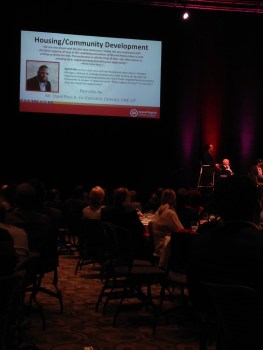
Yesterday, I took a picture of this quote from Dr. King, on the overhead of the Grand Rapids Urban League’s 17th Annual Corporate Breakfast in honor of Dr. Martinimg_1373 Luther King Jr.

In light of Dr. King’s quote, Co-Executive Director of LINC UP Darel Ross II spoke eloquently and boldly on the topic of Housing and Community Development.`

Grand Rapids has an Affordable Housing Crisis.

This Fall the Grand Rapids Chamber of Commerce hosted an Issue Summit on the topic of the Affordable Housing Crisis in Grand Rapids.

The Summit brought speakers representing many community stakeholders, including representatives from 616 Development, Grand Rapids Urban League,Rockford Construction, ICCF, MSHDA, and many local non-profits, including Mel Trotter Ministries, HQ, Heartside Ministries, on this lack of affordable housing, what is as Mayor Bliss emphasized, admittedly, “a complex issue”.

I have previously offered my own perspective, both as a lawyer representing real estate developers/investors, and as Board Chairman at Mel Trotter Ministries.

All people are valuable – made in the image of God.

There are people who are hurting in our local community.

Dr. King’s quote is applicable to us, today.

There is a “fierce urgency for now.”

What Mel Trotter Ministries is doing.

In 2016 Mel Trotter Ministries helped 216 families and individuals find permanent housing.

There is still much work to be done.

There are still a significant number of hurting families who need housing in Grand Rapids, alone.

It requires action on our part.

The easy route is apathy and complacence.

Take action.

I invite anyone reading this to join me for lunch sometime and learn what we at Mel Trotter Ministries, in collaboration with so many others, are doing to end homelessness.

e-mail: Jeshua@dwlawpc.com


Twitter: @JeshuaTLauka

Business Law Update: Key Terms to Consider in Business Contracts.

If you’ve followed my posts for any amount of time, you probably aren’t surprised that I  like reading and writing about the latest Michigan court cases.

Particularly if they are relevant to business or real estate. I always find there are some lessons to be learned.

As another aside – I also like to include photos I took of downtown Grand Rapids, Michigan – overloimg_1360oking Rosa Parks Circle. This one, from today, shows the Zamboni smoothing out the ice for skaters looking to enjoy some weekend ice skating.

The latest case on my mind:

Summit Diamond Bridge Lenders, LLC v Philip R. Seaver Title Company, Inc.

This dispute really has to do with:

Forum Selection Clauses in a Contract.

Backing up a step, why do we prepare written contracts for business transactions?

Contracts are about risk allocation.

In any business transaction, business owners need to  have set in stone terms that answer one question:

who bears what risk?

A Forum Selection Clause would include language indicating that no matter where a dispute about the contract occurred, the contract will be interpreted under (in our case) Michigan law, and the parties agree that any dispute shall only be resolved in _______ County (Typically,  Kent County, Michigan, for my clients.) The parties then would agree to submit to the jurisdiction of said Courts.

Therefore, if your contract contains a forum selection clause, and, for instance, you are owed money by a company in Florida, you would not need to retain a Florida attorney for initiating a lawsuit in Florida. Just initiate the lawsuit in good ole’ Grand Rapids.

So as a general principle, if your business operates in commerce in other states or countries, it is wise to have such a clause.


However, the Summit Diamond Bridge Lenders case tells us that although generally such clause is enforceable, it isn’t always the case.

FACTS:

This case involved an escrow agreement with a  forum selection clause that “provides that California law governs any dispute arising from or related to the escrow agreement. The parties also designated the state of California in the agreement’s forum-selection clause.”

Plaintiff brought suit in Michigan alleging defendant, title company, breached its fiduciary duty as escrow agent of the loan funds by dispersing the funds without an approved letter of credit. Id. at page 2.

Defendant filed a motion to dismiss – arguing that Plaintiff sued in the wrong state. California was the proper forum for the dispute under the plain language of the escrow agreement.

The trial Court agreed. It dismissed the case.

The trial court held that California was the proper forum based upon the plain language of the forum selection clause.

The Court of Appeals reversed.

The Court of Appeals noted on page 3 of its decision that “In Michigan, public policy favors the enforcement of such clauses and, absent certain exceptions” citing Michigan Statute, MCL 600.745(3)(a)-(e).

Those excepts are:

(a) The court is required by statute to entertain the action.

(b) The plaintiff cannot secure effective relief in the other state for reasons other than delay in bringing the action.

(c) The other state would be a substantially less convenient place for the trial of the action than this state.

(d) The agreement as to the place of the action is obtained by misrepresentation, duress, the abuse of economic power, or other unconscionable means.

(e) It would for some other reason be unfair or unreasonable to enforce the agreement.” Id. at pg 5, citing MCL 600745(3).

The Court looked to California Law to determine whether or not the forum selection clause applied. California had a statute that ” precluded from bringing suit against a defendant who is a foreign corporation unless …(2) the agreement relates to a transaction involving at least $1,000,00.” Id. at page 4.

Because the agreement does not relate to a transaction involving at least $1,000,000, because defendant only agreed to hold in escrow $700,000 of plaintiff’s funds.

Essentially, the court of appeals held that since California would not entertain the lawsuit – because it did not meet the monetary threshold – the parties couldn’t obtain effective relief in California – satisfying the exception under subsection b.


Important Lesson:

1. Understand Your Contract Before Signing. 

Contracts are about risk allocation. In a business relationship you need to decide what risk you are willing to bear, and what risk you will allocate away. I am sure in this case Summit did not foresee a dispute arising, and therefore was willing to bear the risk in the event of a dispute to litigate in California in an inconvenient forum. They were fortunate that an exception applied and allowed them to maintain their suit in Michigan.

2. Understand  Your Contract After Signing.

Your business contract will dictate what your rights and duties are.  Here, Summit had the perceived contractual duty to pursue its dispute in California. However, its attempt to avoid abiding by the contract worked out – but it was costly. It was initially dismissed. It took an appeals court to find that a narrow exception applied.

Questions? Comments?

e-mail: Jeshua@dwlawpc.com

www.dwlawpc.com

Twitter: @JeshuaTLauka


Real Estate Law Update: Recently Enacted Michigan Legislation Abolishes Dower Right.


A few days ago Governor Snyder signed into law 21 Bills, including Senate Bills 588 and 560 that abolish a surviving wife’s dower right.

The measures are now Public Acts 489 and 490 of 2016.

This is good news since dower right is a relic of the past, sometimes referred to as an “inchoate dower interest” (You can look it up in Black’s Law Dictionary if you are interested.)

I have previously written about the consequences for failing to account for a wife’s dower right in real estate transactions. It appears that there won’t be any Michigan case law developing over this issue in the years to come.

Lawyers will no longer be including in transferring deeds from marital couples the magic words “and his wife for purposes of dower only.”  Something to get used to.


e-mail: Jeshua@dwlawpc.com

http://www.dwlawpc.com

Twitter: @JeshuaTLauka


A Lawyer’s Year-End Reflections.

img_1338-002It is the end of 2016. I am having “big picture” thoughts as the year ends.

I have a pretty nice “big picture” view out of my office window.

Out of my office window from the 12th floor of 99 Monroe overlooks many ice skaters at Rosa Parks’ Circle in downtown Grand Rapids.

It is certainly a fun time of the year: my kids love Christmas break – being home from school, getting presents, visiting with family.

But right now I can’t help but feel a sense of heaviness in my heart.

My grandmother passed away last week. Traveling home to Saginaw to see her in her last days and attend the funeral was challenging.

The reality is that this time of year is hard for many people, for many reasons.

This week I was reminded specifically of this hard reality when I attended a court hearing for a real estate investor client. FYI, to any real estate owner or manager, a recent unpublished court of appeals case that you might want to check out: Anderson v Chaundy. This case provides a good example of what not to do when evicting a tenant.

If you want to feel depressed, just show up at any local courthouse for the landlord/tenant docket.

Invariably, you will see among those present, individuals whose spirits are down – for all sorts of reasons.

I was in the courtroom this particular day and couldn’t help but notice the hopelessness in the eyes of a particular individual being evicted for non-payment of rent. I also noticed the distinct smell of alcohol on this person, at 9 in the morning.

This person did not dispute that they owed rent. The result? This person would be ordered out of their apartment in ten days.

I’m not ashamed to say that as the current Chairman of the Board of Mel Trotter Ministries, I care very deeply about the homeless, hurting, and hungry.

Walking out of the courtroom, my “Mel Trotter” hat keeps my mind going…

What is going to become of this person?

Maybe they end up sleeping in their car, maybe under a bridge.

Hopefully this person ends up receiving help – to meet them where they are at. Places like Mel Trotter Ministries, that will take in families and individuals to care for them – provide them time to get into affordable housing.

An encouraging statistic – since January 2016, MTM has placed 217 families & individuals into permanent homes.

I’m not trying to bring anyone down during a festive time of year – but as this year ends I wanted to bring two “big picture” realities to the forefront:

  1. The Holiday Season aside, there remains great injustice in this world.
  2. There is great hope.

There are families and individuals that are truly hurting this holiday season.

There are people who have lost loved ones; lost homes. People who are victims of injustice.

The good news is that we can all do something to offer hope to the hopeless.

You can volunteer or provide a year end gift to support organizations locally, like Mel Trotter Ministries, Kalamazoo Gospel Mission, Kids Food Basket, Volunteers in Service, Westwood Christian Services, HQ Grand Rapids, Goodwill Industries of Greater Grand Rapids, or globally, like International Justice Mission, Compassion International, and many more.

I hope you will join me in this Christmas season and send out gifts and prayers to make an impact in the lives of those hurting.

Business Law Update: You have Terms and Conditions, but are they CONSPICUOUS?

Business Owners – ask yourself:

When selling or buying, what are in my company’s Terms and Conditions?

You can check out some of my prior posts on Terms and Conditions. “TnCs” are important to review closely. TnCs “allocate risk” among the two parties to the contract. In some instances, even if one party never reads the TnCs.

Recent Case…

On November 29th, a Court of Appeals case was issued stemming from a product sold by a business to a customer. The case: John French Jr. v Ben’s Super Center

This case involved “the sale of a defective outdoor wood furnace”

Facts:

“On May 21, 2011, after meeting with defendant’s salesman, Todd Kaatz, and having a fairly lengthy discussion with him regarding purchasing an outdoor wood furnace for his home, plaintiff purchased an outdoor wood furnace, (“Optimizer 250″) from Ben’s Supercenter for $12,000.00.” Id. at pg 1.

Defendant delivered the Optimizer 250 to plaintiff’s property and plaintiff installed it.

Sometime around Christmas of 2011, after plaintiff had been using the furnace for about three weeks, he began to have trouble with its performance and contacted Kaatz for help.

“Kaatz…came to plaintiff’s property and inspected the furnace, but they were unable to determine why the furnace was operating inefficiently.”

After several years of attempting to work with the manufacturer and “retrofit” to make the furnace work, Plaintiff sued Defendant.

Plaintiff raised about of claims, variations of “breach warranties”.

Among other things, Plaintiff claimed that Defendant had breached an “implied warranty of merchantability.”

Essentially, it is implied in a sale of goods that what the buyer is getting, he or she will be able to use for the purpose it is generally intended to be used for.

Michigan law allows a business to exclude such warranties.

So the question is: did this business properly exclude any such warranties?

Answer: No.

Under MCL 440.2316 if a business is going to exclude such warranty, it must do so in CONSPICUOUS LANGUAGE. According to the statute, conspicuous “means so written, displayed, or presented that a reasonable person against which it is to operate ought to have noticed it.” Id. pg 4.

In this case, the business pointed not to any of its own terms and conditions, but to the manufacturer’s handbook, which had one line that stated: “No other warranty is expressed or implied.” Id. Pg 5.

As the Court noted – this was not conspicuous language.

The Court upheld the verdict in favor of Plaintiff.

Take Away on Terms and Conditions

  1. Read the Terms and Conditions

Enough said.

2. Implement Terms and Conditions

I recommend business clients to always include a Terms and Conditions page that is either attached to the back of their physical Purchase Orders, or is included in their Website and incorporated by reference. The Terms and Conditions will, essentially, allocate risk and liability, on such items like:

  • warranties (what is the provider guaranteeing and what isn’t it?) As emphasized by the French case – disclaimers need to be CONSPICUOUSLY IDENTIFIED.
  • payment terms (when and how is payment accepted? Late fees?)
  • remedies (what is your recourse in the event the goods aren’t what the buyer expected? Are your damages limited to a refund, or can you get related damages as well? Can attorney fees be covered?
  • Venue – (where can you bring your dispute? An arbitrator? Who pays the fees? Is the location of the arbitration specified?

3. Enforce Terms and Conditions

And of course, its important that a business enforces its terms. I have had clients who have been sued before and forgot of their advantageous language in their terms and conditions. If a business is sued and it waits too long in the litigation before raising its right to arbitration, the court very well might consider the business to have “waived its right” to arbitration. Although, “Waiver of a contractual right to arbitrate is disfavored” by the Courts. Best v Park W Galleries, Inc, No. 305317, 2013 WL 4766678 (Mich Ct App September 5, 2013), app den 495 Mich 979 (2014).

Questions?

e-mail: Jeshua@dwlawpc.com

http://www.dwlawpc.com

Twitter: @JeshuaTLauka

Real Estate Law Update: A Discussion on Laches


A few years back I wrote a post about the legal doctrine of Laches and how laches relates to real estate disputes.  

Since then, I consistently get a lot of hits on that post – and a lot of searches for “laches in real estate.”

Why?

I don’t know. Maybe because its an unfamiliar term, unless you went to law school (even then).

Maybe because it is a valid defense to some real estate related lawsuits. (which it is if you read my previous post).

An October 2016 Michigan court of appeals decision came out on the subject, so I thought I would write about it.

The case:   Charter Township of Lyons v James E. Petty, et al. (unpublished) No. 327686 (Oct. 13, 2016).

But first, as a recap…

The Equitable Doctrine of Laches:

“Laches is an equitable tool used to remedy the inconvenience resulting from the plaintiff’s delay in asserting a legal right that was practicable to assert.” Public Health Dept v. Rivergate Manor, 452 Mich. 495, 507; 550 NW2d 515 (1996).

As such, “when considering whether a plaintiff is chargeable with laches, [a court] must afford attention to prejudice occasioned by the delay.” Lothian, 414 Mich. at 168. It is the prejudice occasioned by the delay that justifies the application of laches.Dunn v. Minnema, 323 Mich. 687, 696; 36 NW2d 182 (1949) .

Therefore in deciding on the issue of Laches, a Court will ask two questions:

1. was there a delay in bringing the claim and, if so,

2. did it prejudice the Defendant?

Question: Why is laches relevant to real estate disputes?

Answer: Because many real estate claims are based in “equity” as opposed to “law”-  e.g. –an injunction, specific performance, action for quiet title…


Recent Case Discussing Laches: Charter Township of Lyon v Petty, et al.

The Lyons case emphasizes “what type of harm (or prejudice) is a party required to show in order to succeed in a laches defense.”


This case was highlight by the Michigan Small Business Association (“SBAM”), since it clarified certain restrictions of small businesses operated on residential lands.

As SBAM reported:

“Two families that operated small businesses out of their homes have to cease their activity on their land because it violated Lyon Township’s zoning ordinance, which had designated the land “residential agricultural.”


However, for our purposes, the Pettys, who were operating their businesses on the property, argued that the township’s “decades-long pattern of ignoring their zoning violations, and the investments they made in their business as a result, precluded the township from taking enforcement action…” Id. pg 4.

The Pettys claimed Laches as one of several defenses to the Township’s enforcement of its ordinance.

The Court went through the legal analysis for laches and noted:

“Prejudice is a mandatory element.” and

“The prejudice necessary to establish a laches or estoppel defense cannot be a de minimis harm…” but “…property owners must establish ‘a financial loss…so great as practically to destroy or greatly to decrease the value of the..premises…” Id. pg 5.


Lesson:

When utilizing a defense of Laches in real estate disputes, showing merely the passage of time is not sufficient.

Showing the presence of harm due to the passage of time is not sufficient.

Significant harm must be shown.


E-mail: Jeshua@dwlawpc.com

http://www.dwlawpc.com

Twitter: @JeshuaTLauka


Pitfalls for Business Owners: Recent Court Case on Piercing the Corporate Veil.

img_1311
Rosa Parks Circle in Downtown Grand Rapids, getting ready for Christmas.

We are heading towards the end of the year – I love the Christmas season!

One thing that comes to mind for local business owners going into the New Year – make sure that your legal documents and procedures are in proper order.

As every business owner should know, one of the main purposes in creating a business entity is, generally, to limit an owner’s personal liability from the obligations of the company.

Unfortunately, liability is not limited in all cases.


Generally though, proper creation of a business entity results in the following:


Owners are not personally liable for the debts of the company.


A November 22nd  Court of Appeals decision highlights some of the pitfalls that could result in a business owner suffering from personal liability.

Check out Joelle 98 LLC v Stone Central, LLC

Law: Piercing the Corporate Veil
 In general, a corporation is treated as an entity that is completely separate from its stockholders. Foodland Distrib v. Al–Naimi, 220 Mich.App 453, 456; 559 NW2d 379 (1996).
That separation may be ignored, however, “where there is a unity of interest of the stockholders and the corporation and where the stockholders have used the corporate structure in an attempt to avoid legal obligations.” Id.
“Piercing the corporate veil requires the following elements:
(1) the corporate entity is a mere instrumentality of another individual or entity,
(2) the corporate entity was used to commit a wrong or fraud, and
(3) there was an unjust injury or loss to the plaintiff.”Lakeview Commons, 290 Mich.App at 510.
Facts: 
Joelle 98 LLC v Stone Central, LLC and its owner Najib Atisha involved a dispute over payments made under a land contract for commercial property.
Joelle 98 LLC claimed that Stone Central, and its sole member owner, Atisha, were both liable for monies owed to Joelle 98 LLC.
After trial, the Trial Court made the following ruling:
“I find that Mr. Atisha is using his corporations interchangeably and not keeping them as separate entities depending on what he’s trying to do. There really is no reasonable explanation as to why if [Atisha Land] purchased [the property] why Stone Central, LLC would have it as its only asset. Nor is there any reasonable explanation that Stone Central, LLC’s only asset [the property] why would the payments be made to [Atisha Land]. He’s obviously treating these separate entity corporations as if they were one. Moreover, there’s a problem with doing that and this case is a good example of it. Because when you do something like that, when Stone Central, LLC should have received the excess funds that were paid by [Joel Cars], the money should be there to repay Joel [Cars]. However, the money’s not there because Mr. Atisha made this decision to comingle funds among his LLC’s. Accordingly, I find from both of those reasons that the corporate veil should be pierced, that Mr. Atisha should be responsible also on the breach of contract action.” (emphasis added.) Joelle 98, LLC Id. at page 5.
The Court of Appeals affirmed the Trial Court’s decision.  It found, among other things, the defendant “had multiple corporate entities…and he used these entities as his instrumentalities…he co-mingled the assets of the entities…” Id. Pg 7. Further, the Court found that Defendant used his corporate structure simply to to commit a wrong – avoiding to refund the payments to Plaintiff. Id.
Lesson: 
Business owners need to take care in forming as well as maintaining their business in order to keep their personal liability protection.
Don’t take actions, like commingling your personal and business funds, that could jeopardize your protection.
e-mail: Jeshua@dwlawpc.com
Twitter: @JeshuaTLauka