Today I was confronted with the Need For Affordable Housing in Grand Rapids.

Today I did what I routinely do on Thursdays around noon time – I visited the school where I mentor a student.
MTM

I walked to the classroom and talked

with his teacher who told me that this student was no longer enrolled in the school.

Just like that, a relationship that I had developed over the school year was suddenly without warning severed.

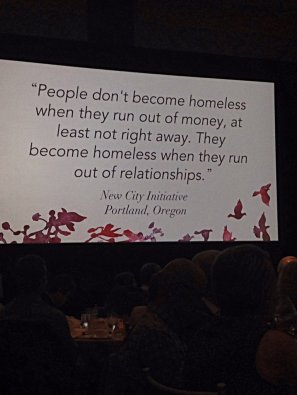
Imagine what an incident like this does for a kid with an unstable home environment.

In a matter of days an elementary school kid’s life (which, in this case, is typically already chaotic enough) can be flipped upside down.

New school. New housing.

Lack of community.

This program that I have been involved in over the past several years connects adults as mentors to school-aged kids is great.

It provides an opportunity for a supportive adult to encourage and love kids, tell them they are valued, made in the image of God.

This program provides a sense of community, a network of relationships for these kids.

I see how eviction can instantaneously severe these important relationships, causing displacement and uproot community.


My Perspective – Wearing several hats

I’ve written before about the fact that I wear a few different hats

I am a lawyer who represents real estate owners, investors, property managers/landlords.

I am occasionally in court evicting tenants who simply have not paid their rent. This lack of payment causes real problems for landlords, many of whom are simply trying to pay down their mortgage obligations.

I am the past-Board Chair at Mel Trotter Ministries.

MTM is the safety net for the homeless in the community. It is the place where families without a home seek temporary refuge and hope to get back into affordable and stable housing.  MTM is doing its part to find a solution to the affordable housing crisis in Kent County.

I am also a mentor in a local school to students, many who regularly face homelessness.

In the past several years all of the kids that I have mentored have relocated. The reasons and issues behind their relocation are varied and complex.

I know that lack of affordable housing was a factor at least in some of those situations.


I see firsthand the tension:

 We should encourage entrepreneurs to revitalize our community  – we should do everything we can to place families in affordable housing.

There is a tension: and it needs to be embraced.

I get these words of wisdom – to “embrace the tension” we see in our daily lives from a man I admire named Fred Keller – founder of Cascade Engineering. Check out his blog where he speaks directly about the tension between “purpose and profit”

For me, the answer isn’t ignoring the tension on complicated matters – which is why I am writing this post. I embrace it.

I will continue to show up and mentor students.

I will continue to serve at Mel Trotter Ministries.

I will continue to provide legal services to the best of my ability for my business clients.


e-mail: Jeshua@dwlawpc.com

Twitter: @JeshuaTLauka

www.dwlawpc.com

Real Estate Investors and Property Managers – 2020 Update on the “Bed Bug Bill”

****Updated January 21, 2020****

Today RPOA Michigan reported that Grand Rapids, Michigan 18th on the List of Top 50 Bed Bug Cities.

This is not a good list to be on. Every year for the last few years, I’ve reported on legislation introduced to address the allocation of responsibility for bed bug and other infestations between landlords and tenants. The latest version is HB 4777 introduced on June 26, 2019, once again by Rep. Brandt Iden.

This bill has made no movement…

Today is Halloween so I thought would write on a topic that gives me the creeps…. bed bugs.

don't let the bed bugs bite.

Courtesy BedBugs.org

Infestations can be an issue that every property manager or owner of residential investment real estate may face.

One June 9th Michigan House Bill 4719 was introduced – by Representative Brandt Iden -himself a Developer and Property Manager in South West Michigan. check out the text here – the Bill would amend the Michigan statute governing landlord tenant relationships to include addressing the control of certain pests – including bed bugs.

Recent Update

There has been no noticeable progress, except that the House Fiscal Agency prepared its legislative analysis a few weeks back – you can check it out here

What the Bill seeks to do:

Impose certain duties on landlords regarding bed bugs:

1. Mandates specifically that the Landlord is to keep the rental space free from bed bugs and provide educational literature about bed bug infestations to new tenants.

2. Prohibits Landlords from renting out space that the landlord knows is infested with bedbugs

3. Provides specific requirements for a landlord to respond to a complaint of bed bugs:

  • within 7 days of receiving a complaint, Landlord shall order an inspection for bed bugs;
  • within 7 days of confirming infestation, Landlord shall begin control and schedule inspections of adjoining rental units.

4. Limits damages against Landlord for infestations unless caused by Landlord’s Negligence.

Impose certain duties on tenants regarding bed bugs:

1. Tenant shall inspect for bed bugs when first occupying the space;

2. Tenant shall not move “infested property” into a rental unit

3. Tenant shall notify Landlord within 2 days of notice of infestation.

4. Tenant responsible for damages due to bed bugs caused by Tenant, or guest.

The bill was referred to the Committee on Law and Justice.

Something that the legislative analysis highlights –

“Notwithstanding any other provision of the Landlord-Tenant Act, the landlord and tenant could agree in writing (by hard copy) or electronic mail how responsibility would be assigned for costs resulting from an infestation, including, but not limited to, costs of
control or treatment.”

This would provide some discretion among the parties to craft a resolution.

My thoughts:

Bedbug infestation is a problem. It can cause tenants problems, particularly in lower income housing. As reference, I would highly recommend reading Matthew Desmond’s book “Evicted” It is no secret that Michigan, particularly Kent County, is experiencing an Affordable Housing Crisis.  Further, unhappy tenants who withhold rent can cause landlord problems that end up in court.

This type of bill could provide clarity to landlords and tenants on their reciprocal duties and rights in such circumstances. It could also provide them flexibility to come up with a resolution to get rid of any infestations.

Questions? Comments?

email: Jeshua@dwlawpc.com

http://www.dwlawpc.com

Twitter: @JeshuaTLauka

Real Estate Law Update: Real Estate Investors Be Careful When Interacting with Occupants of Foreclosed Property.

It is a rainy Monday afternoon. It has beenIMG_1873 dark all day long.  I took this picture earlier today and the rain isn’t letting up.

As a way to distract from the gloomy weather I thought it might be a good opportunity to share some of my thoughts about a court case that came out a few days ago involving a real estate investor, property manager, and a hold over occupant of property.

This case illustrates ways that real estate investors and property managers can go wrong when dealing with occupants of foreclosed property.


The Case:

Anderson v Great Lakes Property and Investment, Inc.

Facts: 

“This case arises from defendants’ actions in removing plaintiff and his personal belongings from the rental property, on two occasions, without resort to summary  proceedings in the court.” Id. page 1.

  • In 2008 Plaintiff entered into a month-to-month lease with the property owner.
  • Owner lost the property to a tax foreclosure in 2015.
  • Real Estate Investor purchased the property at tax sale in the fall of 2015, and hired defendant Great Lakes to manage the property.
  • After the purchase, Investor and Property Manager, sent a letter of ownership to all occupants of the property, including plaintiff, which gave plaintiff 10 days to vacate the property.
  • Thereafter, defendant Great Lakes’s sole shareholder, defendant McMorris, came to plaintiff’s unit and demanded that he vacate within 3 days.
  • When plaintiff did not vacate the premises, defendants came to the property on January 15, 2016, and removed plaintiff’s personal belongings from his unit.
  • After defendants left, plaintiff returned to the property, purchased and installed a new lock on his door, repaired the door, and placed his personal belongings back into his unit.
  • The next day, defendants returned and once again, removed plaintiff’s possession from the property.
  • Plaintiff filed a six-count complaint against defendants for a violation of the anti-lockout statute. Id. Page 2.


Law:

Anti-Lockout Statute – MCL 600.2918 

Any landlord who has gone through the process of evicting a tenant knows that, in the residential leasing context, there are heightened duties of landlords, and heightened rights of tenants.  Tenants have the right not to have their possessory interest in the property interfered with, without the proper court procedure being complied with (Summary Proceeding Action in District Court)

The Anti-Lockout statute provides damages for forcible ejectment from property or unlawful interference with a possessory interest in property.


Subsection (1) (forcible ejection) applies to any person. 

Subsection (2) (unlawful interference) applies to any tenant in possession.

Violating the statute can cause a property owner/landlord to be liable for statutory damages (3 times the amount of actual damages or $200.00 whichever is greater.)


Here, the District Court sided with the new Owner – basically holding that the Plaintiff was simply “a squatter”, entitling him to no rights or protections.  Id. page 2.

The Court of Appeals REVERSED!


As the Court of Appeals noted, “[t]he Michigan anti-lockout statute, MCL 600.2918, “virtually eliminates the self-help remedy in Michigan in favor of judicial process to remove a tenant wrongfully in possession.” Id. Page 3 citing Deroshia v Union Terminal Piers, 151 Mich App 715, 719; 391 NW2d 458 (1986).

The Court also held that “There is no statutory or caselaw definition of squatter.” Id. Page 4.

The Court also questioned whether the Investor or its Manager gave proper notice to terminate. It was questionable whether the “Notice” mailed to each tenant satisfied the requirements to recover possession of property under Michigan law. MCL 554.134(1) – (holding that “[a] tenant is entitled to one month’s notice to quit in order to terminate a month-to month tenancy at will” Id. Page 4.


In short – if you purchase property that is occupied, you need to properly use the court systems to remove tenants.


Lesson:


To avoid any unfounded claims by holdovers, it always makes sense after purchasing property at foreclosure, when there are any occupants present, to go through the lawful channels for a court proceeding to extinguish any possessory rights and to make sure any personal belongings are handled appropriately.

You don’t want to expose yourself to undue liability.


Questions? Comments?

E-mail: Jeshua@dwlawpc.com

http://www.dwlawpc.com

Twitter: @JeshuaTLauka

OCC’s Remarks on Fintech Charter – “A Work in Progress”

It is already, Thursday. It has been a hectic week so far, so I thought I would include a photo I took of more peaceful and serene moments – Michigan’s Upper Peninsula. Beautiful…

Back to the issue at hand,

2017-09-01 18.01.03

Today, Keith A. Noreika, Acting Comptroller of the Currency gave remarks concerning Fintech Companies at Georgetown University’s Fintech Week.

You can read Mr. Noreika’s remarks here

Fintech recap…

The prior OCC, Thomas Curry announced earlier this year that OCC would move forward with considering applications from financial technology (fintech) companies to become special purpose national banks.


“The OCC published a paper discussing the issues and conditions that the agency will consider in granting special purpose national bank charters.” You can check that paper out here


Fintech Charter: Praise, Debate, Criticism and a Lawsuit.

The propriety of a Fintech charter has been supported by the Fintech community in general.


As reported by Crowdfund InsiderBrian Peters, Executive Director of Financial Innovation Now  “a public policy coalition comprised of Amazon, Apple, Google, Intuit and PayPal” stated;

“FIN believes that payments and lending regulation needs streamlining for the modern era. We commend the

OCC’s leadership and vision in driving this regulatory discussion. The OCC has rightly concluded that its approach must evolve to ensure that all American consumers and small businesses are empowered with better access to the benefits of financial technology.”

According to Crowdfund Insider  “Fintech Charter could benefit innovative financial firms that can provide superior services at a lower cost for both consumers and businesses.”


That being said, the propriety of such action by the OCC has been questioned by others, and officially sued by the Conference of State Bank Superviso

rs as an “unprecedented, unlawful expansion of the chartering authority”- check out the Press Release from the CSBS back in April.


The OCC’s present Stance on a Fintech Charter – a Work in Progress.


Mr. Noreika stated today that “If, and it is still an if, a fintech company 


has ambitions to engage in business on a national scale and meets the criteria for doing so, it should be free to seek a national bank charter.


It appears no action will be taken until at least the lawsuit is resolved.

“As for our initiative to use our authority to charter nondepository fintech companies, that remains a work in progress, and as you know that authority is also being challenged by the Conference of State Bank Supervisors and the New York Department of Financial Services. Although we will defend our authority vigorously, we have not decided whether we will exercise that specific authority.”


Mr. Noreika also addressed some of the criticism of Fintech Charters.  I won’t go through his entire remarks, but he concludes by reassuring that any fintech comp


any approved would – at its core  – be a bank:

“The chartered entity, regulated by the OCC, would be a bank, engaged in at least one of the core activities of banking—taking deposits, paying checks,or making loans. The folks who suggest that the OCC is considering granting charters to nonfinancial companies are wrong.


Why Fintech Intrigues me – Purpose Driven.

I’ve previously talked about why fintech is so intriguing.

a. taking a risk doing something different;

b. disrupting business as usual;

c. for the good of others.


That’s social entrepreneurship at its finest.


Questions? Comments?

e-mail: Jeshua@dwlawpc.com

http://www.dwlawpc.com

Twitter: @JeshuaTLauka

Business Law Update for LLCs: The Words You Use In Your Operating Agreement Matter.

Good morning, all! Yesterday was a beautiful day, see the photo I took overlooking downtown Grand Rapids. The leaves are already changing color.

Today I read a Court of Appeals Case that came out yesterday that provides a good example for business owners.

Background – Today LLCs are generally the entity of choice.

Most businesses that were formed in Michigan last year were Lim

IMG_1858

ited Liability Companies. This is for several reasons:

Limited liability (Once a limited liability company comes into existence, limited liability applies, and a member or manager is not liable for the acts, debts, or obligations of the company. “Duray Dev., LLC v. Perrin, 288 Mich. App. 143, 151 (2010))

Flexibility (centralized management – generally no distinction between owners/managers) 

No double taxation (like in traditional C-Corporations).


Your Operating Agreement is an Important Document

However, just forming the LLC by filing the articles of organization with the State of Michigan is not enough to fully protect your business.

One fundamental document is your operating agreement.  It is that document that spells out how the business affairs of the company are conducted.

It also spells out the “exit” – in what event and on what terms can a member leave the company?

I have often written about why your operating agreement matters.

Today I read an unpublished court of appeals decision that provides another illustration on why not only having the operating agreement matters, but also the exact language in your operating agreement matters.


Healthwise Medical Clinic, PLLC, and NP DREAMS,LLC


Facts:

The parties:

Plaintiff Rhonda Keller, LNP and Defendant Kasandra Lechel, licensed nurse practitioners.

They were the sole members of two LLCs – HealthWise was the “operating company” and NP Dreams owned the real estate used by HealthWise.

Keller and Lechel had entered into operating agreements governing
HealthWise and NP Dreams.

The HealthWise Agreement had a “personal and professional standard of conduct” section that required a member to withdraw from the company if they violated the provision.

Keller found out that Defendant Lechel had taken actions that she deemed should require Lechel to resign. Lechel did not resign and therefore Keller sued to compel withdrawal from the company.

There were other claims and counter-claims made between the parties; however, the issue relevant for purposes of my article is regarding the buy-out provision in the Operating Agreement.

The Operating Agreement required the Company to buy out a withdrawing member under certain terms.

Plaintiff sued to expel Lechel, claiming she committed bad acts that required her removal. As such, Plaintiff should not be required to compensate her buy out.


Trial Court’s Decision

The Trial Court agreed.

With regard to the HealthWise and NP Dreams Agreements and compensation due to Lechel, the trial court held that “neither the buyout nor the liquidation option provides a logical and just resolution.” The court pointed to uncontroverted proofs that the corporate debts exceeded assets. Further, the trial court explained, because Lechel had breached the contract first, she was not entitled to recover on it. The trial court issued an order stating that Lechel “is not entitled to any compensation for her interests in the two Limited Liability companies.” Id. Page 4.


The Court of Appeal’s Decision

Court of Appeals reversed on this issue.

Law: Your Operating Agreement is a Contract. Courts will interpret a Contract in accordance with its plain meaning.

The Court of Appeals analyzed this issue as follows:

“Our primary goal in interpreting a contract is to honor the intent of the parties by enforcing the plain and unambiguous language of the agreement. See Klapp v United Ins Group Agency, Inc, 468 Mich 459, 473; 663 NW2d 447 (2003); Defrain, 491 Mich at 367. Clear and unambiguous language will be enforced as written. Farmers Ins Exch v Kurzmann, 257 Mich App 412, 418; 668 NW2d 199 (2003).


The Court reviewed the Operating Agreement and held that the language was clear and unambiguous:

“[i]f such Member shall fail to voluntarily withdraw, the Company shall take such
action as may be required to compel resignation under the same terms.” Section 5.2 lists the terms for voluntary withdrawal, including 2 options for compensating the withdrawing member: either (1) payment of 80% of the member’s share of the agreed-upon value of the company, which amounts to $40,000 to defendant.” Id. at Page 7.


The Court’s language in its opinion is very telling. It was not going to apply “equity” since the parties were free to contract how they saw fit.

Despite testimony that HealthWise’s liabilities exceeded its assets, we see no reason to apply an equitable remedy when a contractual remedy is available. See Tkachik v Mandeville, 487 Mich 38, 45; 790 NW2d 260 (2010).

The parties were free to bargain for protection in the event of a court-ordered withdrawal, and they did so.


Lesson:

Take care in drafting your operating agreement. If you desire a penalty in the event of termination of a membership interest – then make sure that language is included in your operating agreement. The courts will enforce clear language in an operating agreement.


Questions? Comments?

e-mail: Jeshua@dwlawpc.com

http://www.dwlawpc.com

Twitter: @JeshuaTLauka


Thursday Thoughts: A Call to Living a More Fearless Life.

This morning, as I do most every morning, I was reading a devotional by author and Pastor Tim Keller – I would recommend this devotional to anyone.

This topic hit me today.

Fear.

If we are honest with ourselves, we all have moments where we are fearful.

I can safely say that during the last week I have experienced some of the following fears:

  • fear of failure (do I have what it takes?);
  • fear of disappointing others;
  • fear of ruining my kids’ lives – am I parenting well?;
  • fear of what other people think of me;
  • fear of the failing health of loved ones.

I am sure I am missing several that could be added to this list.

This morning’s devotional ended with the prayer below.


IMG_1856
“The Songs of Jesus” Devotional by Timothy Keller


Roller coasters.


I love roller coasters (this ties in, I promise).

It has been too long since I visited Cedar point, Michigan’s Adventure, Six Flags Theme Park, etc…

What I love about roller coasters –  I know that I am fastened in tight –  I am not worried about falling out.

Because I believe I am secure, I am left simply to enjoy the ride (and feel like I’m a superhero).


If I thought that I was really going to fall out – I am sure the ride would not be fun at all – but from start to finish – terrifying.

Life is hard.

There are many hardships that could cause me to panic.

The real question though is:

What am I fixing my eyes on?

Where is my security?


My Answer:

I am not my own. 1 Corinthians 6:20.


Because of that, I will pray Tim Keller’s prayer and strive to live more fearlessly today.


Questions? Comments?

E-mail: Jeshua@dwlawpc.com

http://www.dwlawpc.com

Twitter: @JeshuaTLauka


Real Estate Investors: In Your Efforts to Make a Profit Be Wary of Cutting Corners.

Let me illustrate a picture for you: Let’s say you are a real estate investor. You show up for a foreclosure sale. There are several people present to bid on a specific piece of property.  One of those guys winks at you, motions you to come over (in a clandestine sort of way).

The guy whispers to you “I will pay you $500 to walk away not bid on this property.

Red Flags should be going off to you by now. Unfortunately, the same red flags either did not go off or where intentionally ignored for the 63 or so individuals who were targeted for bid rigging at foreclosure sales by the Department of Justice.

“The Antitrust Division has prosecuted scores of real estate investors who, for their own benefit and profit, conspired to corrupt the bidding process at foreclosure auctions.” – Assistant Attorney General Makan Delrahim of the Justice Department’s Antitrust Division

In today’s market, good deals for real estate investors are getting harder to come by. With distressed property becoming a scarce resource and competition ever increasing, some real estate investors have resorted to less than  legal  acts to boost their profit.

2017-09-23 19.30.53Investors should know that the  Department of Justice as well as State Agencies are cracking down on unfair real estate practices.


 

Spartan Stadium. This photo has nothing to do with the post, and is only motivated by Spartan Nation’s victory on Saturday (I took this photo at a different game a few weeks ago)

On Friday, the DOJ announced that Jim

Appenrodt pleaded guilty to two counts of bid rigging in U.S. District Court for the Northern District of California in San Francisco.


Investigations Have Yielded 63 Plea Agreements to Date.


In Michigan the record numbers of foreclosed properties since 2008 has provided a market (albeit one that is slowing down) for flipping residential real estate. With this opportunity to profit has also created an opportunity for abuse and fraud.  The real estate legal landscape is complex enough, do yourselves a favor – follow the rules.


Questions? Comments?

E-mail: Jeshua@dwlawpc.com

http://www.dwlawpc.com

Twitter: @JeshuaTLauka

Real Estate Law Update: Bill Moves Forward Allowing Single Member LLCs To Evict Tenants without Legal Representation


UPDATE ON PROPOSED House Bill 4463 – Would Allow LLCs to Evict wi

thout Legal Representation.

House Bill 4463 was introduced in March and referred to the  committee on law and justice.


The Bill would allow owners of a single-member LLC (or a married couple under certain conditions) to file their own eviction actions on behalf of the LLC witho

2017-09-14 15.04.09

ut the need for legal representation.

If the Landlord is seeking money damages, the amount, not including taxable costs, must be under the small claims Court maximum.

Back in May, the Bill came out of the committee on law and justice and


a substitute bill was referred for a second reading.

Just 8 days ago the substitute was adopted. Yesterday the Bill was

referred to the Judiciary Committee.
The Major Difference in the Substitute Bill as Adopted.

The major revision that came out of the committee affects property managers.

The Bill as introduced would have allowed property managers or agents to represent the LLC under certain circumstances – e.g. – having personal knowledge of the relevant facts related to the Property and tenancy.

That language was removed from the first version of the bill.

Under the substitute bill, Property Managers or other Agents would not be allowed to represent the LLC.

Further, this is a “burden shifting” mechanism in the substitute bill – the law would place the burden on the LLC owner to prove he or she is in compliance with the statute. That makes sense – since the legislature would be creating an exception to the rule – only lawyers practice law.


A Divisive Issue: To be, or not to be your own lawyer?

I commented that I would be surprised if this bill passes, although other states have similar laws.  The reason I was surprised is demonstrated a legislative analysis that came out just a few days ago.


A recent Legislative Analysis highlights the extreme opposite view points – those expressed by Real Estate Investors and Real Property Owner Associations, and those of Attorneys and Judges.


To Hire an Attorney or Not?

As I stated in my last post, the Bill makes sense for Landlords who want quick and cost-effective resolutions. I understand that an Investor who is not making money on a tenant also doesn’t want to expend additional legal fees to evict a Tenant. This is particularly true since the most attorney fees that a Landlord can recover against a residential tenant is limited to the statutory amount (currently $75).

All business owners make this same business decision –

at what point can I handle a legal matter myself and at what point do I pick up the phone and call my lawyer?


However, I will refer readers back to the lawyer who has a fool for a client…


Questions? Comments?

e-mail: Jeshua@dwlawpc.com

http://www.dwlawpc.com

Twitter: @JeshuaTLauka

Business Law Update: Another Call to Clear Contract Drafting.

It is Artprize again in downtown Grand Rapids! See one of the exhibits on Monroe Avenue in front of the Venue.

2017-09-14 13.08.48


Question:

Did you know: “Shall” has a different meaning then “May”?

One is mandatory.

The other is permissive.

In business, it pays to be clear in the contract language you use.


Check out this recent Michigan Court of Appeals decision on why you need to take care in drafting contracts.


This case was a dispute over a commercial lease contained in a “letter agreement” – and the legal concept of contra proferentem that ambiguities in contracts should be construed against the drafter.


According to the Court of Appeals: “the primary question presented in this case is
whether the following paragraph of the letter agreement precluded plaintiffs from filing this lawsuit:
“10. The failure of either party to perform the preliminary duties outlined in
this agreement will permit the obligee of the duty to declare a default and
terminate this preliminary agreement to lease or other remedy that may be agreed
to by the parties.”

The trial court found that this language precluded the tenant from suing.

The court of appeals disagreed.

The Court of Appeals evidently found this language to be ambiguous.

“It is an elementary rule of construction of contracts that in case of doubt, a contract is to be strictly construed against the party by whose agent it was drafted.” Shay v Aldrich, 487 Mich 648, 673; 790 NW2d 629 (2010).

This rule of construction is known as “contra proferentem”.

The contra proferentem rule is applicable only as a last resort, when other techniques of interpretation and construction have not resolved the question of which of two or more possible reasonable meanings the court should choose. It is a tie breaker when there is no other sound basis for choosing one contract interpretation over another.”
Klapp v. United Ins. Group Agency, Inc., 468 Mich. 459, 460, 663 N.W.2d 447, 449, 2003 Mich. LEXIS 1224, *1 (Mich. 2003).

However, in this case, the Court seemed to make much of the fact that the drafter, who was a party to the contract, was an attorney.

The Court of Appeals reversed the trial court decision and found that the language did not preclude the tenant from filing suit and the case needed to proceed to trial.


Conclusion:

Small business owners often times are wearing many “hats”. They are working with limited cash flow and are forced to make many choices. Many of these choices are in areas outside of their expertise.

Oftentimes startups and small business owners will “cut corners” to be more efficient and cost-effective.

When it comes to signing a legally binding contract – it is simply not worth cutting corners on.

The cost of what you do not know can be significant.

Question? Comments?

e-mail: Jeshua@dwlawpc.com

http://www.dwlawpc.com

Twitter: @JeshuaTLauka


Join me at Mel Trotter Ministries 3rd Annual Season of Hope Event – Keynote by Author Ron Hall “Same Kind of Different as Me”

mtm_2016_soh_web_banner3

Occasionally when I am walking in downtown Grand Rapids I will run into a guy with dirty clothes, smelling bad, looking homeless. When I am asked for money, my gut reaction is to want to help. Honestly though, oftentimes I have no idea what is the right response.


I will invariably pray for them, but I’m faced with the hard decision:

  • do I give them money?


  • do I buy them food?


  • do I simply direct them to Mel Trotter Ministries?


Should I be doing more?


Join me in hearing from Ron Hall, author of “Same Kind of Different as Me”  – you can check out the trailer to the movie, based upon the book, that is coming out soon.


Ron Hall’s friendship with a man that society had all but disregarded and given up teaches us all fundamental lessons – namely:

All people are valuable and loved by God. 


Hear from some of Ron’s experiences and valuable lessons.

As he tells us in his book:

To love a man enough to help him, you have to forfeit the warm, self-righteous glow that comes from judging.”
On Tuesday September 26, 2017 Mel Trotter Ministries will host its 3rd Annual Season of Hope Event at the JW Marriott with Ron Hall as our guest speaker.

We are still looking for corporate sponsors. Tickets are available here


Thank you to our Honorary Leadership Committee!

Kenneth Graham & Linda Vos-Graham
James & Nancy Engen
Tom & Marcia Haas
Cate & Sid Jansma Jr.
Bill & India Manns
Tom & Jackie McGovern
Mark & Elizabeth Murray
Gordon & Karla Oosting
Janis Petrini
Jerry & Marcia Tubergen
Harold & Lori Voorhees, Jr.
Greg & Meg Willit


E-mail: Jeshua@dwlawpc.com
http://www.dwlawpc.com
Twitter: @JeshuaTLauka