Business Law Update: Recent Court Case On Sour Business Relationships and Arbitration Clauses

Good afternoon, all! The sun was beautiful this morning rising over downtown Grand Rapids.

 

IMG_2144Today I read a recent unpublished Court of Appeals decision that originated out of Kalamazoo County, Michigan –

The case: Elluru v Great Lakes Plastic, Reconstructive, and Hand Surgery PC


A summary of the Facts:

  • Plaintiff Elluru and defendant Holley practiced medicine together in  the Company.
  • Holley served as president and Elluru as secretary.
  • They entered into employment agreements with the Company.
  • The agreements provided for termination by the Company for cause upon written notice or without cause upon 90 days’ written notice.
  • They also executed a Stock Redemption Agreement that provided that a shareholder must sell his shares to the Company if he voluntarily terminated his employment  or if the Company discharged his employment with or without cause.  See Elluru , page 1.

Then the business relationship took a turn for the worse…

  • In 2015, Elluru began to express his desire to dissolve the Company.
  • Elluru called for special meetings of the shareholders to discuss his proposals for dissolution.
  • Holley disagreed with the plan to dissolve the corporation.
  • Instead, on December 7, 2015, Holley sent a letter to Elluru that he had terminated Elluru’s employment with the Company.
  • Elluru also was notified that, pursuant to the Stock Redemption Agreement, his shares were being acquired by the Company.
  • Elluru was further notified that, because he was no longer employed by the Company, he was also terminated as an officer and director of the Company.
  • The letter also reminded Elluru that he was subject to a non-compete agreement. Id, Page 1-2.

Not completely unexpected, Elluru sued Holley and Company and asked the Court to:  A. Dissolve the Corporation and B. Set Aside his Termination.

Holley and the Company filed a motion to compel Elluru to Arbitration pursuant to an arbitration clause in the parties’ employment contract. Id. Page 2.

Holley argued that “the employment agreement required that the claims be submitted to arbitration. Holley argued that “arbitration was required because all of the claims arose out of the employment agreement.” Id.

The Circuit Court denied Holley’s motion. Holley appealed.

The Court of Appeals was presented with this issue:

“whether the issue of arbitrability should have been decided by the trial court or by the arbitrator.” Id.


About Arbitration Clauses…


Michigan law favors upholding arbitration clauses in contracts.

Under Michigan law, arbitration clauses are to be liberally construed with any doubts to be resolved in favor of arbitration. Amtower v William C. Roney & Co., 232 Mich App 226,233 (1998).


In this case, the Court noted that:

The Uniform Arbitration Act, MCL 691.1681 et seq…provides that, where there is an agreement to arbitrate, a trial court must order the parties to arbitrate unless the court determines that there is no enforceable arbitration agreement. The Act further provides that it is for the court in the first instance to determine arbitrability…” Id. (my emphasis).

There is an exception to the rule that the Court determines arbitrability… 

The parties contractually agreed to delegate to the arbitrator the question of arbitrability. Id. Citing Rent-A-Center, West, Inc v Jackson, 561 US 63, 69 n 1; 130 S Ct 2772; 177 L Ed 2d 403 (2010).

In the instant case – the Court looked at the Employment Agreement:

“In paragraph 10 of the employment agreement, the parties agreed that ‘[a]ny controversy or claim arising out of or related to . . . this Employment Agreement . . . shall
be settled by arbitration . . . in accordance with the Employment Dispute Resolution Rules of the American Arbitration Association . . . .’ Those rules provide that the “arbitrator shall have the power to rule on his or her own jurisdiction, including any objections with respect to the existence, scope or validity of the arbitration agreement.'” Id. Page 3.


The Court of Appeals agreed with Holley:  “that this matter should have been submitted to arbitration and that the trial court should have held the claims in abeyance pending the outcome of arbitration.” Id. page 2.


Lessons and General Arbitration Considerations:

1. Arbitration Clauses are favored. A Court generally decides whether the clause is enforceable, and whether or not the matters are arbitrable.” However, the parties’ can contract to allow the issue of arbitrability to be decided by the arbitrator.

2. This brings up a general point – the parties could have negotiated differently in their employment and shareholder agreements before signing. “Freedom of Contract.

3. Arbitration clauses have the benefit that they are usually most cost-effective, quick, and they are private (as opposed to court cases which are public filings).

4. Where is the Other Party located? For a client who engages in business over state lines, an arbitration clause might not be effective if you are trying to quickly collect a debt owed.  Instead, you  might want a “Jurisdiction and Venue Selection Clause

This clause would include language indicating that no matter where the dispute occurred, the contract will be interpreted under Michigan law, and the parties agree that any dispute shall only be resolved in _______ County (Typically,  Kent County, Michigan, for my clients.) Therefore, if your contract contains a jurisdiction and forum selection clause, and you are owed money by a company in Florida, you would not need to retain a Florida attorney to try and collect.

5. Arbitration may be a gamble.

Businesses should realize that if you elect to arbitrate a matter and you do not like what the arbitrator finds – your rights to appeal may be severely limited.

Questions? Comments?

e-mail: Jeshua@dwlawpc.com

www.dwlawpc.com

Twitter: @JeshuaTLauka

Lessons from Court: Real Estate Investors combating the Affordable Housing Crisis

I took this photo this morning. Even when its cold outside, there is just something about the morning sun rising over Grand Rapids that gets me excited.

IMG_2115


Wearing Multiple Hats.

Life is complicated when we wear multiple hats. I’ve written about the multiple hats I wear.

We all wear multiple hats. For example – I am a Christ Follower, a husband, a father, an attorney, a (recent) church elder, a volunteer, a mentor, etc…


The two roles that I find colliding most often are as follows:


Hat 1. I am an attorney representing business owners including real estate investors.

Hat 2. I am the past-board Chair at Mel Trotter Ministries – and am committed to ending homelessness, one life at a time.


Two Universes colliding

My two universes often collide and bring me right into the middle of a thick tension. That tension is highlighted by a scenario I often find myself in, such as the one a few days ago.


Recently I walked into the courthouse with a relatively simple task: obtain a Judgment for my client.


My client, real estate investor, recently purchased property that had an existing holdover tenant. This tenant had not paid any rent in months.


The complicating factor that I discovered when I met the tenant outside the courtroom:

the tenant was a single woman with young children, with no place to go.


These are the situations that law school doesn’t prepare you for.

How do I advise my client in this situation?


An Affordable Housing Crisis.

I just read an article today from Nick Manes at MIBiz on how in Grand Rapids there is still a Strong Demand for rental real estate.

This article is one of many constant reminders that it is hard to find housing in Grand Rapids, even if you can afford it.

The young lady I met at court, and others similarly situated, could very well find herself homeless.

I am thankful for places like Mel Trotter Ministries where in 2017 over 400 individuals found housing.


Three Examples of Real Estate Investors being part of the Solution.

I am thankful for those who are willing to work with tenants. In the case above, my client agreed to provide additional time for the tenant to find other housing.

See here for my article on the Eviction Prevention Program – a program implemented last month intended to address the affordable housing crisis in Grand Rapids.


Another client scenario comes to mind. This particular client is a well-to-do business owner with a big heart, and entered into the residential real estate rental industry truly to be part of the solution – to provide affordable housing to those in need without gouging those on a fixed budget – even though the market would allow my client to charge higher rent.

This is social entrepreneurship at its finest!

However, in this particular client’s case, my client was “too nice”. He was taken advantage of by a tenant.  In the end, I believe the Landlord’s generosity actually did a disservice to the Tenant by allowing the Tenant to stay months in the property without paying. Certainly the tenant wasn’t helping the landlord by failing to make any efforts to pay.

Many of my clients can’t afford not to receive regular rent. They rely on the rent to pay the mortgage.

This is why it is often said that the affordable housing crisis is complicated.


I also think of the private investor who decided last year to work with Mel Trotter Ministries to house and case manage homeless youth – to get them into their own stable housing. This investor knows that he could get more profit on this rental, but is willing to take less money in hopes of changing the lives of homeless male youths.


A Lesson from these 3 Real Estate Investors….

There are no easy answers here. But what I appreciate about all three of the investors I mentioned above, is that they were all committed to “do something” – maybe somewhat awkwardly at times, maybe with mixed results, but their hearts were in the right place and they all did something to be part of the solution to transforming lives out of homelessness. They were committed to making their community better.


Are we willing to step up and be part of the solution, in some capacity?

We can’t do everything, but we can all do something.


How are we working to build a better community?


E-mail: Jeshua@dwlawpc.com

www.dwlawpc.com

Twitter: @JeshuaTLauka


Because We Aren’t Meant to Do Life Alone. Grand Rapids Business Mentoring Connection

On occasion, I post about how I mentor elementary school-aged boys with difficult family backgrounds.

The truth is that kids with hard family backgrounds are not the only ones who need mentors.

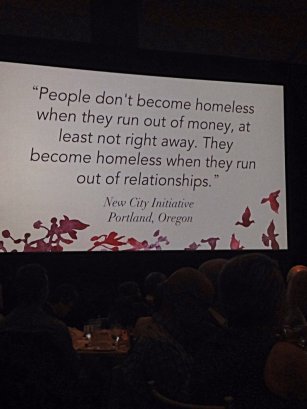
The quote in the photo from New City Initiative in Portland, Oregon is revealing in a lot of ways. Homelessness may, by and large, be a product of a lack of relationships.

MTM

Applying this statement to the regular working class person who isn’t in jeopardy of going homeless, a lot of our problems could be stymied by the presence of authentic relationships.


The truth is, we aren’t meant to do this life alone.

Yet we so often do just that.

As for me, although I am interacting with many people on any given work day, I find myself too often dealing with concerns, problems and frustrations in a vacuum.

I recall having a conversation with a friend of mine a while back, another business professional. He commented on how, although he knows a lot of people, he doesn’t have anyone that he regularly confides in. He doesn’t have “close friends”.

I think my friend is in good company with many others.

So then why so often do we find ourselves living in a vacuum?

My thoughts:

It is hard to be vulnerable with others.  Our tendency is to hide our imperfections.  We can brush aside the reality that we lack relationships by telling ourselves, or others “I just don’t have time“. I believe that is just a smokescreen for the real issues:

It is hard to admit our weaknesses, failures or shortcomings.

The bottom line: we need to be in authentic relationships.

We need mentors, confidants, people willing to walk along side us.

On the flip side, we need to be pouring into other people as well.

There are excellent resources in our community, I think of an excellent one like the Jandernoa Mentorship Program (JEM).  Unfortunately, I am sure JEM and other groups would readily admit, those resources are limited.


I hear this theme in my work life, in the business community, non-profit service, I hear this when I go to church: call it mentoring, discipleship, or “sharpening iron” – we need to be in authentic relationships to build each other up.

So, I decided to do something about it.

Yesterday I created a Group on LinkedIn: Grand Rapids Business Mentoring Connection

I created this Group simply to provide a forum to make it easy for people to connect in meaningful ways.

1. Professionals who recognize their need for a mentor;

2. Professionals who are established in their career and are willing to share their experiences and failures with others, at any level; and

3. Professionals seeking authentic community and peer relationships.

My goal isn’t that Members of this group have any formal obligation. My hope is that those who join this group are willing to add value to others and connect on a personal level.


So my question and charge to you reading this post:

Who are you pouring into?


Established Professionals: You have something to offer. Consider joining this group and being available to connect with peers, younger professionals on whatever time you have available in your life.

Younger Professionals: Join this Group. Get others to join. Reach out and ask for help. You are the future leaders, but you cannot succeed in life on your own.


e-mail: Jeshua@dwlawpc.com

Twitter: @JeshuaTLauka

www.dwlawpc.com

Michigan Law Update: The Neighborhood and Commercial Corridor Food Initiative. Community Revitalization Now Includes Downtown Grocery Stores.


Several years ago ago I took my family to New York City. (and took the below photo).

Even amidst the chaos of protecting my 4 young children from darting out in2015-11-26-13-04-02to oncoming traffic – we absolutely loved the City.


We loved the walk-ability of City life –

that you could walk down a block to a grocery store and get all of your household needs.


I love downtown Grand Rapids.


(Below, photo I took this morning from my office)

If Grand Rapids wants to encourage urban living, it needs to continue to support growth in downtown grocery stores.


This is not a novel concept.

There has been recent exciting development in Grand Rapids on this front – see Meijer opening a grocery store on Bridge Street.

Also, Russo’s International Market opened last year as well.

31475361-29c9-4425-948b-a1699f87f148-original


“Neighborhood and Commercial Corridor Food Initiative” – Public Act 229

Last March, House Bill 4207 was introduced in the Michigan house. Known as the “Urban Food Initiative.” (re-named “Neighborhood and commercial corridor food initiative”)

This Bill intended to provide incentives for community revitalization that would include a downtown Grocery Store.

Specifically, HB 4027 would make “Urban Food Initiatives” allowable to receive funds under the Michigan Community Revitalization Program


Passed into Law

On December 28th this House Bill was given immediate effect and assigned as Public Act 229 . 


The law provides incentives to “new neighborhood” food initiatives. That is why, per the new law:

a new neighborhood and commercial corridor food initiative…is not eligible for a community revitalization incentive if it is located within 1 mile of an existing retail supermarket, grocery store, or produce market…that offers unprocessed USDA-inspected meat and poultry products or meat products that carry the USDA organic seal, fresh fruits and vegetables, and dairy products for sale to the public.”


Hopefully this law will spur development of urban grocery stores in Grand Rapids, and beyond to places like Detroit. There is wonderful community development work going on right now in Detroit, as the article below highlights.


Healthy Food Options – Essential for Urban Living

Clearly having available and healthy food options in a downtown are necessary to City living. Check out this recent article from Non-Profit Quarterly about Communities of Color Developing Residents-Owned Groceries.

According to the Article:

“Grocery stores…often anchor “neighborhood economies, recirculating local revenues through wages and nearby businesses. They can also be neighborhood hubs, where people go to buy good food as well as employment centers and sources of community pride.”

“Alas, the lack of these hubs can be damaging, notes Malik Yakini, who directs the Detroit Black Community Food Security Network. Yakini is one of a host of activists across the country who are working to foster community ownership of food businesses in communities of color.”


We should be encouraging Malik Yakini and others and supporting community ownership of food businesses in communities of color. Hopefully the new law will attract such local ownership.


Parting Thoughts

A downtown grocery store is necessary if a City wants to attract urban living – it is also necessary to provide healthy food options for those living downtown without readily available transportation.

I think particularly of the under-employed and the homeless who receive services from organizations like Mel Trotter Ministries. In Grand Rapids, we are confronted everywhere with the need for Affordable Housing. It would be great to see grocery options as well.

I am also encouraged by the many businesses in West Michigan honestly asking the question: “How am I building a better community?

e-mail: Jeshua@dwlawpc.com

http://www.dwlawpc.com

Twitter: @JeshuaTLauka


Business Law Update: Concerning Current Politics and Non-Disparagement Clauses

Today I read an interesting article published by the ABAJournal.

The ABAJournal article asks an interesting question (all politics aside):

“If Trump sues Bannon for violating a nondisclosure agreement, what are his damages?”

Again, all politics aside, the article presents interesting questions that comes up in business transactions: when faced with entering a business relationship should you enter into a non-disclosure agreement? (NDA)

money-73341_640
The thought that comes to mind when I hear the word “Politics”

What if the NDA contains a non-disparagement clause? Can you even enforce it if breached? If so, what are your damages?

Going back to the ABAJournal Article, one legal scholar quoted in the ABAJournal article opined that such a lawsuit would be problematic, given damages are speculative (my paraphrase). University of Arizona law professor Jane Roberta Bambauer stated:

“It’s difficult for litigants to claim large damages when the nature of the award is that they expected to be less embarrassed (as opposed to NDA cases involving trade secrets and other financially valuable pieces of information that the protected party expected to exploit himself)”

Regardless of the damages argument, in general, such agreements are enforceable. That was the opinion of Yale Law Professor Stephen L. Carter who stated:


“We can put aside nondisparagement clauses buried in the boilerplate of consumer contracts, which companies sometimes try to use to prevent those who buy their products from posting negative reviews. Most courts have understandably held such clauses unenforceable,”…“But when non-disparagement clauses are included in employment contracts or separation agreements, they are enforced more or less routinely.”


Non-Disparagement Clauses…With a Penalty?

Would you sign a non-disparagement clause with a penalty attached to it in the event of breach?

A few years ago an interesting story emerged regarding a non-disparagement clause involving a settlement entered into by the City of Lansing.

As a lawyer, if I was approving my client’s signature on the City of Lansing Settlement agreement, I’d want to be sure that my client fully understood what constitutes “disparagement”


What is Disparagement?

Michigan courts have held that “disparagement” is plain in its meaning. It is not ambiguous. Therefore, when signing a non-disparagement clause you can have some reasonable certainty in your conduct.

Often times as part of a confidential settlement agreement, the parties to a dispute will agree not to “disparage” each other.

Disparage – as you will see below – has a fairly common meaning.

‘Disparagement’ is ‘a false and injurious statement that discredits or detracts from the reputation of another’s property, product, or business.’ Black’s Law Dictionary (7th ed. 1999).

stated another way:

(1) To speak of in a slighting or disrespectful way; belittle. (2) To

 reduce esteem or rank.’ . . . American Heritage Dictionary (4th Ed. 2000)

2. Michigan Case Law Concerning “Non-Disparagement Agreements”

Rarely have I ever seen a non-disparagement clause become an issue. In fact, a review of Michigan case law supports this – I found only a handful of cases in Michigan where the parties litigated over one party’s alleged “disparagement” after a settlement agreement was entered.

One such case was the 2011 case of Sohal v. Mich. State Univ. Bd. of Trs. & Davoren Chick M.D., 2011 Mich. App. LEXIS 915, *12-14, 2011 WL 1879728 (Mich. Ct. App. May 17, 2011).)

There the Court held: “the term “disparage” in the non-disparagement clause is not ambiguous. While plaintiff attempts to ascribe several “reasonable” meanings to the term “disparage,” and thus the non-disparagement clause, the term fairly admits of but one interpretation.” Citing Meagher v Wayne State Univ, 222 Mich App 700, 722; 565 NW2d 401 (1997).

As the Court noted, “Other state courts have determined that the term “disparage” in non-disparagement clauses of settlement agreements are unambiguous.” (citations omitted).


In closing – non-disparagement clauses are standard clauses (but not universally used). Courts have consistently held that “Disparage” is a plainly understood term. It isn’t an ambiguous term.

Disparagement clauses may be enforceable. Most often, I would presume they would at least serve the purpose of deterring a party from speaking disreputably after a settlement is signed. However a good question to ask before entering into the agreement; unless you have a stipulated damages provision, how will you calculate damages in the event of a breach?


Questions?  Comments?

e-mail: Jeshua@dwlawpc.com

www.dwlawpc.com

Twitter: @JeshuaTLauka

Legal Update: Legislation that Real Estate Investors, Landlords and Veterans Should Keep Tabs on in the New Year.

It is a beautiful and cold afternoon in downtown Grand Rapids today.

IMG_2039

We head into 2018 with some Michigan Bills that affect Real Estate Investors, Landlords and Veterans.

Veterans.

The Michigan Legislature is pushing hard to protect those who have served our country.

Yesterday MLive posted that the Michigan Legislature is taking up some 50 bills that will affect Veterans

One such bill I highlighted in a post last summer. On August 16, 2017 HB 4872 was introduced into the Michigan House.

The Bill would amend the “Elliott-Larsen civil rights act,” and would provide that veterans are included in the list of those protected by Michigan law against housing discrimination.

The Bill would define Military Service as:

“STATUS OF BEING AN ACTIVE DUTY MEMBER OF THE ARMED FORCES OF THE UNITED STATES OR A VETERAN WHO RECEIVED AN HONORABLE OR GENERAL
ADMINISTRATIVE DISCHARGE FROM ACTIVE DUTY WITH THE ARMED FORCES F THE UNITED STATES.”

The Bill brings two thoughts to mind:

  1. Our Veterans and those who served our country deserve to be treated fairly in housing and all other areas of life.
  2. This Bill brings up a fundamental question: are Veterans being discriminated against in housing? Does it happen?


According to statistics recently published in the Bridge with insight from Dennis Van Kampen of Mel Trotter Ministries, there are fewer homeless veterans than ever in Michigan today, but more homeless youth.

The Bill was sent to the committee on Military and Veteran Affairs. No action has been taken on this bill since I posted in August, but I will continue to track this bill.

I look forward to hear comments from the public on this issue: are we in Michigan protecting our Veterans access to fair housing?


“Nuisance Property”: Bill Would Protect Those in Affordable Housing from being penalized for calling 911.

On November 28, 2017 Senate Bill 667 was introduced.

The bill is intended to prohibit local units of government from penalizing tenants, occupants, or landlords of rental dwellings for contacts made for police or emergency assistance in certain situations.

Presumably, the Bill is intended to restrict those municipalities that have ordinances that punish landlords and tenants by labeling a rental property a “nuisance” when a certain number of calls to police or emergency assistance.

The Bill in its current form, generally, holds a “reasonableness” standard – meaning the emergency call must be reasonable under the circumstances – the person making the call must reasonably believe they, or a person they are calling on behalf of, is a victim of a crime; and the intervention is needed to prevent a crime, or respond to an emergency.


This appears to be one of several Bills that would potentially address the affordable housing crisis.

As a reference, I would highly recommend reading Matthew Desmond’s book “Evicted” It is no secret that Michigan, particularly Kent County, is experiencing an Affordable Housing Crisis.

One potential way to address this crisis is providing Landlords and Tenants security that their local government unit will not unreasonably label properties as nuisances if the police are called for real emergencies. It appears this Bill is attempting to address such a scenario.


Questions? Comments?

email: Jeshua@dwlawpc.com

http://www.dwlawpc.com

Twitter: @JeshuaTLauka

Fintech Startup “Lemonade” Latest $120 Million Round of Funding – Following Through on Its Purpose Driven Mission.

“The key to disrupting a billion-dollar industry is ‘ignorance”  check out this recent article on “Lemonade” via BusinessInsider


In the past I have posted on Fintech Companies – and highlighted a few. One of those in particular is “Lemonade” a disrupter in the urban rental and home insurance industry.  Check out an update on some exciting things Lemonade is doing.

Yesterday TechCrunch reported that The Softbank Group is leading a $120 million round of funding for Lemonade.

2015-11-26-13-04-02


But as a threshold matter:

What is Fintech?


According to FinTech Weekly:

Financial technology, also known as FinTech, is a line of business based on using software to provide financial services. Financial technology companies are generally startups founded with the purpose of disrupting incumbent financial systems and corporations that rely less on software.


The idea of a business’ purpose of “disrupting incumbent”…anything is intriguing to me.

Some systems need to be disrupted. I have previously posted my own thoughts on being a disruptive force for good.

To that point, Lemonade seemingly fits the bill. Look no further than it’s mission statement on its homepage: “Instant everything. Killer prices. Big heart.

About Lemonade:

According to its website, Lemonade is the “World’s First P2P Insurance Company” (Peer-to-Peer).

Lemonade provides Renters and Homeowners Insurance to New Yorkers.

According to a CrowdFundInsider article: “Lemonade has positioned its platform in a David vs. Goliath battle to challenge antediluvian insurance incumbents by providing a far better service at a superior price.”

Who doesn’t root for the underdog?

Technology Driven.

Shai Wininger, co-founder and President of Lemonade, explained to CrowdfundInsider that technology drives everything at Lemonade.

“From signing up to submitting a claim, the entire experience is mobile, sim

ple and remarkably fast. What used to take weeks or months now happens in minutes or seconds. It’s what you get when you replace brokers and paperwork with bots and machine learning.”

Disruptive Force for Good.

Daniel Schreiber, co-founder and CEO of Lemonade. told CrowdfundInsider “the opportunity is unusual. Disrupting an industry that has not changed for a hundred years ”

According to an article posted by Venture Beat:

Lemonade is also setting out to combat existing models through an annual “giveback,” where it donates unclaimed money to good causes.”

Talk is cheap.  Has Lemonade followed through on its actions?

Apparently so – in a very impressive way.

Softbank, in leading the latest round of funding for Lemonade had this to say about Lemonade’s innovative business model

“The idea is that users won’t file unnecessary claims if they know that the money isn’t just going to be kept by a faceless corporate entity and will, instead, support a cause they care about.”


Lemonade’s 2017 GiveBack

Lemonade posted last year that its Giveback for 2017 was $53,174:

this amounts to 10.2% of its 2017 revenue.

It hasn’t reported the Giveback for 2018 yet.


The article highlighted one such GiveBack recipient: New Story

“New Story builds safe homes for the homeless, and aims to transform slums into thriving communities in the developing world.”


“Through the Giveback to New Story, the Lemonade community built a new home for the Quitéño family, from start to finish. Now, the Quitéño family will have a safe home to return to every day, giving them a stable foundation to improve their health, education, and income.”


Conclusion.

Lemonade is doing some innovative work for the social good.

I love the concept of this startup –

a. taking a risk doing something different;

b. disrupting business as usual;

c. for the good of others.

That’s social entrepreneurship at its finest.

If you are a homeowner or tenant residing in New York, this company is worth checking out.

e-mail: Jeshua@dwlawpc.com

http://www.dwlawpc.com

Twitter: @JeshuaTLauka

Legal Update for Real Estate Investors: Fraud, Harassment, and a Bill to Penalize Falsely Representing Need for a Service Animal.


A beautiful end to Tuesday.IMG_2014

Here’s a profound truth those in the real estate industry will readily acknowledge:

Owning and Managing Real Estate is uniquely challenging.


I hear it from my Property Owner/Manager clients. I experience it when I am involved in negotiating in landlord/tenant disputes.

If you own or manage investment real estate, you are involved in messy business.


I believe that is why, at least in West Michigan, there is an opportunity for good property management companies – and a handful of companies I work with locally do it really well.

DOJ Sues Landlord for Sexual Harassment Allegations

Some of the pitfalls property owners/managers have to watch out for are illustrated in a recent press release announce by the Department of Justice.

Yesterday the Department of Justice announced that it filed suit against Owners and Managers related to allegations of sexual harassment in Kansas properties.

According to the press release, the owner and manager:


sexually harassed female residents at the rental properties from at least 2010 to 2014.  According to the complaint, Thong Cao engaged in harassment that included, among other things, making unwelcome sexual advances and comments, engaging in unwanted sexual touching, and evicting tenants who refused to engage in sexual conduct with him.


Sexual harassment is a violation of several Federal and State laws.


Georgia Real Estate Investor Sentenced to 16 months in Prison

Today, the DOJ announced that a Georgia Real Estate Investor was sentenced to 16 months in Prison for bid rigging public foreclosure sales.

According to the Press Release:

The evidence at trial showed that Purdy and his co-conspirators agreed not to compete for residential real estate at foreclosure auctions in Forsyth County and defrauded lender banks and homeowners.  Among other methods, the conspirators held secret “second auctions” of properties, dividing among themselves the auction proceeds that should have gone to pay off debts against the properties and, in some cases, to homeowners.


In today’s real estate market, bidding is competitive. If you are asked to take part in anything like this at your local sheriff’s sale – DON’T DO IT.
Lying About Emotional Support Animals, a Crime?


Michigan Law requires a public accommodation to permit the use of a service animal by a person with a disability.

Among other things:

“A public accommodation shall not ask a person with a disability to remove a service animal from the premises due to allergies or fear of the animal. A public accommodation may only ask a person with a disability to remove his or her service animal from the premises if either of the following applies:

(a) The service animal is out of control and its handler does not take effective action to control it.

(b) The service animal is not housebroken” MCL 750.502c

Landlords and property owners should heed the warning of General Deputy Assistant Secretary Bryan Greene of the U.S. Department of Housing and Urban Development’s Fair Housing and Equal Opportunity.

“Many people with disabilities require the assistance of an animal to carry out major daily activities,” said  “Complaints alleging disability discrimination now account for the majority of the complaints HUD receives. HUD will continue to enforce the law and educate the public on the rights of people with disabilities in housing.”

.

However, a Michigan Senate bill proposed on November 28, 2017 would make it a crime to falsely represent the need for a service animal to a landlord. Violation would also give right to a Landlord to evict such tenant.


This is an interesting bill. I look forward to seeing if it gains any traction.


Two takeaways from this news headline:


1. It is worth being proactive and engaging legal counsel. 

Issues arise. When in doubt, e-mail or call your attorney.


2. Residential Real Estate Investment is highly regulated.

If you are a landlord leasing out “residential” property as opposed to purely commercial property (business tenant), you are under much more stringent regulations. You must comply with Federal laws, like the Fair Housing Act and state laws, like the Michigan Truth in Renting Act. Make sure you are operating lawfully.


Questions? Comments?

email: Jeshua@dwlawpc.com

http://www.dwlawpc.com

Twitter: @JeshuaTLauka

Legal Update for Commercial and Residential Property Managers, Investors: Winter is Here. Are you Prepared?

The snow is coming down in Grand Rapids! I took this photo last week from my office – ice skating has officially started.

IMG_1951


With the winter months – comes an issue for landlords, property managers, and real estate investors…

icy sidewalks and parking lots.

These types of conditions are a primary reason why investors hold real estate in LLCs.

Two recent Michigan court cases came out where tenants sued their landlords for injuries related to slip and falls on icy sidewalks/parking lots:

Schuster v River Oaks Garden Apartments

Ferguson v Lautrec LTD

The claims in both cases had to do with a Landlord’s statutory duty under Michigan Compiled Laws 554.139(1)(a) to keep the Property kept fit for its intended use.


In General:

A Difference Between Commercial and Residential Leases – FREEDOM OF CONTRACT

The above mentioned duty is one created by Michigan statute. It does not apply to Landlords/Property Managers or owners of commercial real estate with commercial tenants.

In the residential context, tenants have certain statutory rights, in addition to contractual. These rights provide extra protection from a landlord’s ability to evict the tenant and are found in such places as “Landlord Tenant Relationship Act” and “Truth in Renting Act”.

One such right of a tenant – the residential property must be kept fit for its intended use and in reasonable repair. These conditions must be met in order for a landlord to otherwise evict a breaching tenant. Stated otherwise, the covenant to pay rent is not an independent covenant to a landlord’s duty to keep the property fit for its intended use and in reasonable repair.

In a commercial context the courts’ mantra is “Freedom of Contract“. The Court will look at the contract that the parties’ agreed to, and, absent extraordinary circumstances, enforce it by its term. (therefore in  a commercial lease you might see language such as the following “rent is due with no right of offset, setoff, counterclaim…”) In such instance, the landlord is telling the tenant that tenant has no right to withhold rent just because landlord may have breached a duty under the lease.

The Courts have recognized that commercial landlords and tenants are “free to contract”


Going back to our Case Studies…

Two Cases of Icy Conditions – different results

Ferguson Case

Ferguson was a tenant who slipped and fell on the sidewalk outside of her apartment building. In court, she argued that defendant was  “liable for her injuries because it breached its duty to maintain the common area of the apartment, i.e., the sidewalk, in a condition fit for its intended use as required under MCL 554.139(1)(a).” Id. page 1.

The Court disagreed.

On appeal, the Court of Appeals affirmed the trial court.
MCL 554.139(1)(a) provides the following:

(1) In every lease or license of residential premises, the lessor or licensor
covenants: (a) That the premises and all common areas are fit for the use intended by the
parties.

Courts have held that “sidewalks . . . constitute ‘common areas’ under MCL 554.139(1)(a).”).

The question the Court asked was: what is “fit” mean in this context?

“Our Supreme Court defined “fit” as “adapted or suited; appropriate,” Allison v AEW Capital Mgt, LLP, 481 Mich 419, 429; 751 NW2d 8 (2008), quoting Random House Webster’s College Dictionary (1997) (quotation marks omitted), and a sidewalk’s intended purpose is for walking, Benton, 270 Mich App at 444.” Id. page 2-3

Defendant, therefore, has a duty to keep the sidewalk adapted or suited for walking.

The court reviewed the facts, as presented in the trial court and affirmed that “In this case, the sidewalk was not unfit simply because there was a patch of ice”. Id. 3


Schuster

“According to plaintiff, [Schuster,] the fall occurred as she took her first steps onto the sidewalk surrounding the complex’s mailbox kiosk. As a result of her fall, plaintiff broke her ankle requiring surgical repair with hardware placement.” Id pg 1.

The Court dismissed her claim, finding that Schuster failed to present evidence that the sidewalk was not fit for its intended use.

On appeal, Defendant does not dispute that the sidewalk was intended for walking and specifically for access to the apartment complex mailboxes. However it argues that the sidewalk, even if ice covered,  was fit for its intended purpose.” Id. pg 3-4.

The Court, like in Ferguson, relied on the Michigan Supreme Court decision of Allison:

“In Allison v AEW Capital Mgt, LLP, 481 Mich 419; 751 NW2d 8 (2008), the Supreme
Court considered a landlord’s statutory duty regarding common areas, particularly as concerns natural accumulations of snow and ice. It held that “the natural accumulation of snow and ice is subject to the lessor’s duty established in MCL 554.139(1)(a)” to keep the premises and common areas “fit for the use intended by the parties.” Id. at 438.

The Court held that  the duty of the Landlord was to provide “reasonable access” to
pedestrians seeking to use it. Id. pg 4.

The Plaintiff, Schuster, claimed the sidewalk was “dangerous”.

The Court of appeals noted; “[t]here is substantial evidence that the conditions, as predicted, developed overnight and that by the time of plaintiff’s fall, they were severe.” Id page 3.

The  Defendant Apartment Complex claimed that the presence of snow/ice was merely “inconvenient”.

The Court held that such “genuine dispute” of fact must be presented to a judge or jury. The Court reversed the trial court and sent it back.


Another interesting argument – Defendant claimed that it had no “notice” of the icy conditions.

The Court held that “notice” was not a prerequisite to the landlord’s duty to keep the property in good condition.

“We initially note, as we did in our previous opinion in this case, that there do not appear to be any published decisions that establish that notice of the condition is required to establish a breach of the duty under MCL 554.139(1)(a).” Id. Page 5.

Lessons:

  • Whether or not the presence of ice or snow on sidewalks presents a breach of a Landlord’s duty to keep the property fit for its intended use is a “highly factual inquiry”.  It depends on the facts of each case – which is what Schuster and Ferguson demonstrate.


  • A Landlord likely cannot avoid its duty to keep the property fit for its intended use by claiming a “lack of notice” of the existence of an icy condition.


  • If you are a commercial landlord with a commercial tenant – FREEDOM OF CONTRACT.

Questions? Comments?

e-mail: Jeshua@dwlawpc.com

http://www.dwlawpc.com

Twitter: @JeshuaTLauka

Grand Rapids Combats Affordable Housing Crisis – Eviction Prevention Program

Updated:

I posted a few years back about Kent County’s Eviction Prevention Program.

I just saw this article about Muskegon’s Eviction Prevention Program. Check it out. It is good news to hear that there this program is achieving some success, keeping people out of homelessness. There is definitely more work to be done…

You know winter is approaching when Rosa Parks Circle begins to freeze over and the ice rink begins to form. See the photo I took from my office yesterday.

In fact, the Ice Rink officially opens on Friday!

IMG_1926
IMG_1927

Before we know it, downtown will look like a snow globe – see the photo, below, I took from last Christmas.
There is an Address Affordable Housing Crisis

As many of you know, Kent County, like much of the U.S. is experiencing a serious lack of Affordable Housing.

The City of Grand Rapids has made concerted efforts to address problem through an advisory board, which has come up with strategies for addressing the Affordable Housing Crisis

Kent County Eviction Prevention Program

Beginning January of 2018, the 61st District Court will begin a pilot program – the “Eviction Prevention Program” (EPP). Judges Faber and Distel are the initial judges presiding over the EPP.

The EPP was developed as a collaborative effort between the City of Grand Rapids, Salvation Army of West Michigan, The Kent County Court System, the Michigan Department of Human Services and with funding provided by Steelcase.

Purpose of the Eviction Prevention Program

The EPP is intended to keep those tenants in housing, who truly want to stay in their housing.

The program will not be appropriate for every tenant.

The EPP appears best suited for those on the margin of being homeless due to an emergency situation (as opposed to those tenants chronically behind in rent).

The EPP provides one-time rent assistance and would allow a Landlord to hold a possession and money judgment in abeyance, pending the Tenant’s payment of rent.

The program is, essentially,  intended as a one-time emergency for those on a fixed or low income, who are essentially faced with the difficult choice of either paying an outstanding medical bill, car repair bill, groceries, etc.., or pay their rent.

What Property Managers and Landlords need to know about this program:

Landlords – any tenants behind in rent which have been served a summons and complaint for eviction, beginning in January 2018, should be receiving information about the EPP along with the summons and complaint.

Tenants will know that this is a potential resource to keep them in housing.

What you need to know:

1. The program is entirely voluntary. Landlords can choose to opt out.

2. Not every tenant will qualify. A tenant needs to have income to make the next month’s rent payment.

3. The program is geared towards keeping tenants in housing. If a tenant wants out of your property, the program will likely not be the right fit.

Why I like this program.

This program provides an opportunity to keep people in housing who are on the verge of being homeless. The fact is, families are experiencing homelessness in Grand Rapids every day.

Practically speaking, the program works for tenants who have the potential to get caught up, who otherwise are good tenants.

The program is an opportunity for Landlords to get paid and to be part of the solution to the affordable housing crisis.

Housing is a community problem. It is encouraging to see the great collaboration between government, private sector, non-profit sector.

e-mail: Jeshua@dwlawpc.com

Twitter: @JeshuaTLauka
www.dwlawpc.com