Real Estate Professionals: New Michigan Law Can Extinguish Redemption Rights

Real estate law is complicated.


I am just going to throw that out there.


Particularly when dealing with a mortgagor (borrower’s) rights associated with the redemption period at a foreclosure sale.


I. Purchasers at Foreclosure Sales – what do they own?

In general, if a third party is the bidder at a foreclosure sale, they have certain restrictions on their ownership. They get a sheriff’s deed.


That deed doesn’t ultimately “vest” them with full legal title until the redemption period expires. Until that “vesting” occurs, Michigan Courts have described a purchaser’s rights as “equitable title” while legal title still remains with the borrower/homeowner/mortgagor.


II. Answer: “Equitable Title” Subject to a Possible Redemption by the Homeowner


The sheriff’s deed becomes “void if the mortgagor, the mortgagor’s heirs or personal representative, or any person lawfully claiming under the mortgagor or the mortgagor’s heirs or personal representative redeems the entire premises sold by paying the amount required” prior to the redemption period expiring. MCL 600.3240.


Therefore there is this period of time, typically ranging from 1 month to 1 year, where the owner of the sheriff’s deed does not have complete legal title.


III. This Creates Problems for the Purchaser


Obviously, this causes problems from the purchaser’s point of view.


How to get access to the property to rehabilitate it, improve it, etc…?


IV. Enter: New Law To Extinguish Redemption Rights if Property is Damaged and Remains Unrepaired


A new Michigan law became effective January 10, 2014 and provides a mechanism to cut off the redemption period of a home owner who is allowing their property to become blighted.


Under MCL 600.3240(13):

” After foreclosure sale and periodically throughout the redemption period, the purchaser at the sale may inspect the exterior and interior of the property and all ancillary structures. If inspection is unreasonably refused or if damage to the property is imminent or has occurred, the purchaser may immediately commence summary proceedings for possession of the property…A court shall not enter a judgment for possession…if, before the hearing for possession, the mortgagor repairs any damage to the property that was the basis for the action. If a judgment for possession is entered in favor of the purchaser, the right of redemption is extinguished and full title to the property vests in the purchaser.
The statute provides a non-exhaustive list of what may qualify as damages sufficient to allow for a lawsuit extinguishing redemption rights:
  • The failure to comply with local ordinances regarding maintenance of the property, if the failure is the subject of enforcement action by the appropriate governmental unit.
  •  A boarded up or closed off window or entrance.Multiple broken and unrepaired window panes. 
  • A smashed through, broken off, or unhinged door.
  • Accumulated rubbish, trash, or debris.
  • Stripped plumbing, electrical wiring, siding, or other metal material.
  • Missing fixtures, including, but not limited to, a furnace, water heater, or air conditioning unit.
  • Deterioration below, or being in imminent danger of deteriorating below, community standards for public safety and sanitation.
 

In theory it should sufficiently protect the interests of both a purchaser at foreclosure, as well as a homeowner who intends to redeem, giving them the opportunity to cure any such defect before a court would extinguish their redemption rights.


However, it will be interesting to see how this law is utilized, and how courts apply it.


Questions? Comments?


email: Jeshua@dwlawpc.com
http://www.dwlawpc.com


Estate Dispute Caused by “E-Z Legal Form” – Another Illustration of the Need For Sound Legal Counsel in any Legal Transaction.


I wrote a previous post about the Problem with Universal Legal Forms


The ABA Journal reports another example making headlines, that highlights my point.


In the article a Florida woman, Mrs. Aldrich, used an E-Z legal Will form that she filled out herself; after she passed away it became apparent that the Will did not have the proper language included in it to handle the “residuary” of her estate.


Because of that defect in the Will, her intentions were overridden by intestacy laws, basically the “default will” of the State. Under those laws, Mrs. Aldrich’s two nieces were beneficiaries of her estate, even though not named in the Will.


I appreciate the comments from the Justices, as cited by the ABA article:


Concurring Justice Barbara Pariente saw the ruling as a cautionary tale. “While I appreciate that there are many individuals in this state who might have difficulty affording a lawyer,” Pariente said, “this case does remind me of the old adage ‘penny-wise and pound-foolish.’ …

“I therefore take this opportunity to highlight a cautionary tale of the potential dangers of utilizing pre-printed forms and drafting a will without legal assistance. As this case illustrates, that decision can ultimately result in the frustration of the testator’s intent, in addition to the payment of extensive attorney’s fees—the precise results the testator sought to avoid in the first place.”


Another adage –  “Anyone who is his own lawyer has a fool for a client.”


This is another cautionary tale of why it pays to retain counsel before making any legal decisions, whether it is related to business, real estate, or estate transactions.


Questions? Comments?

email: Jeshua@dwlawpc.com

http://www.dwlawpc.com


Businesses: Check Out My Guest Blog Article About the Legal Role of Your Board of Directors


Yesterday I published a guest blog article with GRAPE where I address the role of a board of directors/board of managers in a business.  You can see that article here


I met with a client very recently that illustrated another important, and related, point:


It is  important to have good people serving on a board of directors who understand their roles.  


A board of directors is there to cast vision, make policy decisions, oversee the company, and its chief executives. The board should also leave the operations of the company in the trust of those who it has named, whether it is the President/CEO or Manager.

A big problem occurs when the Board instills its own judgment into the decision making process of issues left under the authority/responsibility of the CEO.


Does your board, whether for-profit or not-for-profit, have the tools to understand their proper roles?


If not, you may be opening your company up to instances where legal duties/roles are breached.


Questions? Comments?


Email me: Jeshua@dwlawpc.com

http://www.dwlawpc.com


Question For Businesses: How Can You Trust your Employees?

I recently met with some business owner clients.  There is no simple way around it, they were in a serious mess.


Facts:


Clients own several businesses. They most recently purchased a business that had a lot of potential for growth. With the business, client assumed the employees of the business.  All signs were that all employees were on board with the change in ownership. My clients were excited to be running a new company and creating a friendly work culture.


After several months two key employees left and took with them several significant accounts that effectively turned the business upside down.


My clients were shocked.


They trusted the employees


What happened?


The clients knew that former employee had compiled a list of the business’ clients; surely there must be something they can do to stop him?
Unfortunately, at this point the clients are pretty limited in their legal remedies.
As an unpublished Michigan Court of Appeals decision from October held:
“A list of customers compiled by a former employee from personal and public sources available to that employee is not protectable as a trade secret…This is true even if the former employee has learned about the “peculiar needs of particular clients” from his employment.”  Indus Control Repair, Inc v McBroom Elec Co, Inc, No. 302240, 2013 WL 5576336 (Mich Ct App October 10, 2013)


There are certain rights that business owners have under the Michigan Uniform Trade Secrets Act, but customer lists compiled from personal sources was not one of them, and this is exactly what the employee took.


At this point, unless there was evidence that proprietary/confidential information was taken, my clients are left with protecting their remaining business by having all remaining key persons enter into “non-competition, non-solicitation, non-disclosure agreements.”


As the Court of appeals indicated regarding customer lists compiled from a public source,  although such information may be protectable by a non-competition agreement, such information is a not a trade secret.” Id.


Lesson:


Although you can do things to give your key employees incentives to remain faithful to your company, sometimes you can get duped. My clients are trusting people, and they wanted to see and believe the best in people. When they purchased this business having their employees enter into non-competes did not even cross their minds.


However, entering into written contacts that are reasonable in how they protect your legitimate business interest is  best practice. It also provides clear communication of what conduct is expected of employees. If you have such agreements in place and they have been clearly communicated to your employees, you will be in the best position to trust them.


Questions? Comments?


email: Jeshua@dwlawpc.com

http://www.dwlawpc.com


Michigan Real Estate Law Update: Evict by E-mail?

Investment Property Owners/Managers must be active at the State Capitol.


On March 18 House Bill 5415 was proposed.  You can check it out here


As far as proposed legislation goes, this is probably the most uncomplicated bill I have seen in a long time.


It would provide that  a “Demand For Possession” could be served via e-mail, if authorized in a written agreement.


Anyone who has had to go through the unpleasant process of either evicting a tenant, or being evicted, knows that the process itself is heavily “form driven”. What I mean, is that, unlike other areas of the law, the process of eviction is a standardized process with standardized SCAO (State Court Administrative Office) Approved forms.

The first form that you must serve on a tenant if you intend to evict them is a “Demand For Possession.” Serving this Demand on the tenant is required before you can actually evict a tenant.


Depending on the type of eviction, it can be a “7-day demand” “30-day demand” even a “24-hour demand”.


Given the great body of state law that provides residential tenants with certain rights, commonly known as the  “Truth in Lending Act” it isn’t surprising that Property Owners/Management are trying to find creative ways to be as efficient as possible when trying to terminate a bad tenant relationship.
Certainly sending an e-mail “LEAVE THE PREMISES IN 7 DAYS OR I WILL SEE YOU IN COURT” might be a quick way to get across the message to a tenant. But then again, if a tenant is not paying his/her rent, e-mail might not be the best way to reach them; I wonder what the chances are that they are not paying their phone/internet service provider?


Thoughts?

email: Jeshua@dwlawpc.com

http://www.dwlawpc.com


Michigan legislative update and my guest blog post on the Michigan Consumer Protection Act


I recently posted a Guest Blog on GRAPE, titled “Business owners: What you should know about the Michigan Consumer Protection Act”: You can view it here


Also, for a look at some updates in Michigan proposed legislation check out the Michigan Public Policy Resource Center


I would like to note that I am encouraged to see the legislation that is being proposed to protect Victims of Sex Trafficking in Michigan. Michigan, as a state, (in my own opinion) is somewhat behind in protecting the victims of crimes.  For more information on National Crime Victims Rights, check out NAVRA


Questions? Comments?


Email me: Jeshua@dwlawpc.com

http://www.dwlawpc.com


Estate planning, Real Estate, Family and… Any Place For Lawyers?


I had a client call me recently.  His father passed away and left him and his siblings a large amount of real estate to share equally.

My client wanted me to draft some deeds since  he and his siblings all “had already decided who gets what

What my client was referring to, is that his father left the Property to his children, as tenants in common. He and his siblings understood that they each shared a complete and undivided equal interest in the whole land.


My thoughts?

Red flag.


Don’t hear me wrong, I get my client’s rationale.  My client thought he and his siblings got along just fine and therefore they didn’t need anything in writing in order to agree to divide up the property. Or if they did decide to put something in writing, they would just do it themselves.

My client’s scenario reminded me of a 2013 Court of Appeals  case that came out quite differently…

Everett Schram Living Trust ex rel. Schram v. Smith, 312500, 2013 WL 5630038 (Mich. Ct. App. Oct. 15, 2013)

Facts of Everett Schram Trust:

Everett Schram (“dad”) owned 3 parcels of land.  Dad divided the land into three parcels and deeded one parcel to each of his children, Plaintiff Lawrence Schram, defendant Julie T. Smith, and defendant Diane L. Tudor.

Dad passed away.

After dad’s death, plaintiff, Smith, and Tudor discovered that the land deeded to each of them was inconsistent with their expectations.

After discussions, all three signed an agreement (Agreement) to redistribute the property in November 2010.

(My interjection – this might have been a great place for siblings to discuss the matter with a lawyer)

The Agreement, in its entirety, states:

I Larry Schram give a gift of money to my sister Julie Smith to move her west property line back to the east.Adjacent [sic] to Yearmans [sic] east property line out to Trask Lake Rd. Sister Diane Tudor is in agreement to have her property run north and south 770 feet wide on Trask Lake Rd.

Generally, the agreement involved a portion of Smith’s property becoming plaintiff’s.
Problem solved, Right?
Wrong.
However, Smith instead sold almost all of her property through a land contract to defendants Craig and Nicole Johnston in March 2011.
Plaintiff filed a lawsuit, requesting specific performance of the Agreement and alleged that his interest in the property was superior to the interest of the Johnstons.

Everett Schram Living Trust ex rel. Schram v. Smith, 312500, 2013 WL 5630038 (Mich. Ct. App. Oct. 15, 2013)

Law: “specific performance” of a real estate sales agreement.
In Michigan, courts have the equitable power to compel a party to go through with the sale/purchase of real estate. This relief is known as “specific performance.” This means that a court would force the sale of the land.   Courts can grant this equitable remedy because Michigan law recognizes the fact that land is unique.  No piece of real estate is the same.
The Problem in this case: The Agreement did not have all the necessary parts of an enforceable contract.
The Court noted that the agreement was “subject to the requirements of general contract law that ‘there must be a meeting of the minds regarding the essential particulars of the transaction.'” citing Zurcher v. Herveat, 238 Mich.App 267, 276–279; 605 NW2d 329 (1999) (quotation marks and citation omitted).
The “essential provisions” to be identified and included in a contract for the sale of land are the property, the parties, and the consideration. Id. at 290–291.
Regarding consideration, to be enforceable the contract must include either the price to be paid or a basis to determine the price. Id. at 282.
 In the Agreement at issue in the instant case, there is no question that neither the price nor a basis to determine the price is provided. Everett Schram Living Trust ex rel. Schram v. Smith, 312500, 2013 WL 5630038 (Mich. Ct. App. Oct. 15, 2013).
Conclusion:
The Agreement did not indicate an amount of consideration – so it was unenforceable. 
Take away:
In family matters, even when family gets along just fine, there is a place for sound legal counsel in matters of estate planning and real estate.

Questions? Comments?


Jeshua@dwlawpc.com

The Words You Use In Real Estate Documents: They Matter.

I recently met with a client at my office – her mother recently passed away.


My client had no siblings, she alone was scrambling to figure out what she needed to do to wrap up her mother’s estate. Mother had died without any estate plan, the largest asset that mother owned was her home.


Prior to passing away, mother added daughter on the deed to her house. Mother assumed that adding daughter to the deed would allow the property to pass to daughter, period.


After a review of the deed, it was clear to me that although mom did add her daughter to the deed, unfortunately, the property would not pass to her when mother died.


Why?


Because mother failed to include a few key words in the deed.


Two ways to hold joint ownership of  Property in Michigan


Under Michigan law, there are generally two ways to jointly own real property – Tenants in Common and Joint Tenants with Full Rights of Survivorship.

Tenants in Common

A tenancy in common is a legal estate, with each tenant having a separate and distinct title to an undivided share of the whole.  Kay Inv. Co., L.L.C. v. Brody Realty No. 1, L.L.C. (2006) 731 N.W.2d 777, 273 Mich.App. 432

Holding property as Tenants in Common means that each owner holds the entire title along with the owners.  Each owner shares in possession of the entire property, and each is entitled to an undivided share of the whole. If an owner dies, his interest in the property is passed on two his heirs.


This is what happened. Since my client’s deed did not contain the “magic words” with full rights of survivorship, my client held the property was a tenant in common with her mother. So, when mother passed away, the property passed to mother’s estate.


The practical effect:

In order to own 100% interest in the property, my client now needs to open up a probate estate and then transfer it to herself. Although this isn’t a really overly burdensome outcome, you can imagine scenarios where the effect would be very much unintended:

what if client’s mom had a will directing where her estate assets should go?

then mom’s 50% interest in the property would go to the will’s beneficiaries


What if mom had other children?  

Then all would take an equal share in the estate’s


You could imagine many scenarios that could result in disputes, or possibly litigation.

Lesson: the words you use matter. Using the wrong words could have unintended and unfortunate consequences.


email: Jeshua@dwlawpc.com

http://www.dwlawpc.com


If You Think Money Can’t Buy Happiness, Try Giving Some Away-Michael Norman


BgIc3--CIAAR3Io

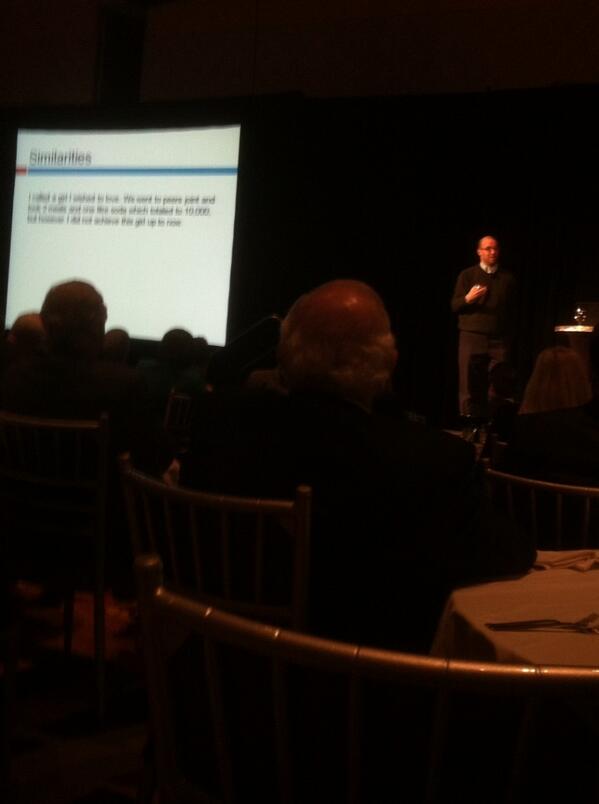
Today I attended the Economic Club of Grand Rapid’s Luncheon at the JW Marriot.

For those of you in the business community in Greater Grand Rapids, I would highly recommend that you check out getting a membership. The Econ Club always hosts top notch presenters and is a great place to connect with other business professionals.


The speaker, Michael Norman, is an author and professor at Harvard’s school of business . Professor Norman is the author of “Happy Money: The Science of Spending”. Although I haven’t read his book, his presentation was extremely interesting. the premise was simple: People who spend money on others gain more satisfaction than those who spend money on themselves. (my paraphrase).


In a lot of respects Professor Norman was “preaching to the choir”  – we all know that Grand Rapids is one of the most philanthropic cities in the U.S. – but his message is one that we all need reminding.


Why do we need reminding?


I believe the answer is simple – we all are selfish.


We think about ourselves, and our own interests.


Professor Norman compiled a lot of data in his book. He most aptly noted that whenever he would ask someone what they would do if they won the lottery, the answers may have varied, but they all had one thing in common – it always involved spending the money on themselves.


To quote the Bible, it is why the apostle Paul had to specifically state it in Philippians 2:3-4:

Do nothing out of selfish ambition or vain conceit. Rather, in humility value others above yourselves, not looking to your own interests but each of you to the interests of the others.


We need this reminding – because it is against our nature to simply think of others above ourselves.


Another statistic Professor Norman presented was that the people who give the most are the poorest.

The middle class generally give the least.


Why is this? I was captivated by Professor Norman’s explanation:

The poor are generally much  more sensitive to the needs of others around them, since they themselves know what it is like to be in need.

Conversely, the middle class are comfortable – and naturally – the fact that there are those out there in need is not the thought at the forefront of their minds.


We all need to be reminded to think outside of ourselves.


I would take Professor Norman’s observation a step further – we will be happier if we give not only our money, but also our time, talents and resources for the good of others.


If we open up our home to share a meal with others in need, if we use our spheres of influence to raise funds, or we use our talents to serve on the board of a local non-profit, we will be truly blessed.


My exhortation to non-profits everywhere:


Keep reminding us that people all over the world are in need – we need to be reminded and to get outside of ourselves.


Questions? Comments?


Email me: Jeshua@dwlawpc.com

http://www.dwlawpc.com


Avoid Illegal Tax shelter Scams: Corporation Sole

I was recently presented with a “trust document” that I have never seen before.


My client asked me: does this document protect me from creditors and having to pay taxes?


My first thought when posed with the question was “I can’t see how


Then, I looked at the “trust” document itself.


The document contained some pretty archaic words, that I had to look up in a black’s law dictionary.


The “trustor” or the trust creator, was identified as a “corporation sole.”


My first thought when looking at this document was:


what is a corporation sole?


Corporation sole. That is a term that I was simply unfamiliar with, for good reason as I would find out.
A review of Michigan case law would show reference to that term vaguely in decisions from the 1800’s. See Joy v. Jackson & M. Plank Rd. Co., 11 Mich. 155, 173 (1863).
I could not find a single Michigan statute referencing a corporation sole.
It took a broader search of federal lawsuits initiated by the Department of Justice in order for me to find recent reference to a corporation sole.
The IRS is well aware of this Concept of a “Corporation Sole”
The Internal Revenue Service defines “Corporation Sole” in its 2004 Revenue bulletin:
“A “corporation sole” is a corporate form authorized under certain state laws to enable bona fide religious leaders to hold property and conduct business for the benefit of the religious entity.”
See the IRS Revenue Ruling here: http://www.irs.gov/irb/2004-12_IRB/ar11.html
Apparently there are some tax schemers offering plans to taxpayers intending to reduce their federal tax liability
 by taking the position that the taxpayer’s income belongs to a “corporation sole” created by the taxpayer for the purpose of avoiding taxes on the taxpayer’s income.
Such companies are fraudulent and have been subject to prosecution by the Department of Justice. See one such Opinion granting an injunction to the DOJ: http://www.justice.gov/tax/Kennedy_Complaint.pdf
Take Away:

When my client was presented with such a document, his gut feeling was that it didn’t seem right.

If it seems to good to be true, that is because it probably is. In this case, the document titled “corporation sole” does not shelter my client’s funds from federal income taxes. In fact, avoiding payment of federal taxes through such a mechanism will likely subject you to serious tax consequences.


Questions? Comments?

email: Jeshua@dwlawpc.com

David & Wierenga, P.C.