
Business Law Update: Consequences for Misclassifying Employees as Independent Contractors

Schuss Mountain, Bellaire, Michigan

Happy New Year! We celebrated the New Year up north with lots of snow. It was a beautiful way to start the New Year.

Businesses: There are Consequences to Misclassifying Workers

Businesses: misclassifying your  workers as independent contractors v.s employees (“IC” vs “EE”) could cost you serious money.

Apparently a local landscaping company found this out the hard way.

According to a December 31 article posted on MLive, this company will have to pay “32 former employees $59,212 in back wages and an equal amount in liquidated damages.”

Calling a worker an IC just to save on paying taxes may seriously hurt your business in the long run. States are enacting laws to make businesses pay for such misclassifications.

New Laws Penalizing Businesses for Misclassification

Back in September 2019 California passed a Bill to correct misclassification of workers as Independent Contractors

Around the same time, Michigan proposed a similar Bill, House Bill 4877

HB 4877 would place the burden on the employer to prove, by a preponderance of evidence, that the employee was not misclassified – with the threat of penalties.

That Bill was referred to the committee on commerce and tourism and has made no movement.

Court Cases go Back and Forth on the Issue

As reported by the ABAJournal, The 9th Circuit Court of Appeals, provided a victory for FedEx Truck Drivers classified, by their employer FedEx, as “independent contractors”  – reversing  “a finding in multidistrict litigation in Indiana and held that nearly 2,700 plaintiffs in California and Oregon are in fact employees.”  See the ABAJournal article here

Different Tests to Determine IC vs EE

States, Federal Government agencies, and Courts all have their own standards of how to distinguish independent contractors from employees.

Look at the Code of Federal Register, as provided by Cornell Law School,  for the definition of Employee and you will get one definition; go to the IRS website and you will find another extensive resource on the subject, see that resource here.  States have their own rules, statutory and case law, as well.

One of the reasons for the lack of uniformity, is that the distinction between IC/EE matters for different reasons – from the federal government’s perspective, it matters, among other things,  from a Federal tax stand point- or whether or not an EEOC , or fair labor standards act claim is at issue.  From a state law perspective, the distinction  can matter regarding unemployment/workers compensation taxes and claims.

Under Michigan law, 3 conditions must be met in order to find an individual is an employee for purposes of Workers Disability Compensation Act Claims, MCL 418.11(1)(d) –  employee means every person performing service in the course of the trade, business, profession, or occupation of an employer at the time of the injury, provided the person in relation to this service does not maintain a separate business, does not hold himself or herself out to and render service to the public, and is not an employer… McCaul v Modern Tile and Carpet, Inc 284, Mich App 610, 616 ( 2001)

The Fed Ex Case

As reported by the ABAJournal:

Under a “right to control” test that applies in both states (California and Oregon), the FedEx drivers are clearly employees, not independent contractors, a three-judge appellate panel held.”

“The drivers must wear FedEx uniforms, drive FedEx-approved vehicles, and groom themselves according to FedEx’s appearance standards,” wrote Judge William Fletcher in both opinions. “FedEx tells its drivers what packages to deliver, on what days, and at what times. Although drivers may operate multiple delivery routes and hire third parties to help perform their work, they may do so only with FedEx’s consent.”

The fact that FedEx called the drivers independent contractors in an operating agreement did not change their actual status as employees, the court said.”

Take Away: 

This last point made by the 9th Circuit Court of Appeals cannot be under stated- how you decide to label your workers is not going to determine their true status as either IC or EE.  How are your workers  actually operating? E.G. – Do you truly have control over their duties to the extent that they are effectively employees?

Definitely a conversation you may want to have with  your legal and tax counsel.

Questions? comments?

email: Jeshua@dwlawpc.com

http://www.dwlawpc.com

Twitter: @JeshuaTLauka

Michigan Business Law Update: Trends to Limit Non-Competes against Lower-Wage Employees.

Last Friday was the tree lighting in downtown Grand Rapids. The Christmas season is officially here!

Rosa Parks Circle, Grand Rapids, MI

A question that comes up often in my business practice: “when are non-competes enforceable?”

I am thankful for Judge Yates with the Kent County Business Court who issues a lot of opinions on this area. In fact, he issued one just a few days ago that is helpful:

You can check out this December 3, 2019 Temporary Restraining Order issued by the Kent County Business Court.

In this instance, a local hair salon (where I used to get my hair cut until they moved from downtown) had their stylists sign non-competes.

The stylists left their employer to work with a competitor. The salon filed an Ex-Parte TRO to stop the stylists from working for a competing hair salon.

The Court, in its opinion, granted in part and denied in part the Salon’s request. The Court (at least before a hearing on the evidence) allowed the stylists to work for a competitor and limited the TRO simply to prohibit the stylists from soliciting customers of their former employer.

A broad takeaway from this brief opinion – yes, non-competes are generally enforceable, but not in all cases. The restrictions must be reasonable.

A question to ask: Is it reasonable to prohibit a hair stylist from going to another salon and using the stylists’ general knowledge and skill to cut hair somewhere else?

Is a business really harmed by this type of competition?

Trending to protect low-wage workers from unreasonable restrictions.

Just recently, Michigan’s Attorney General joined the Attorney Generals of several states in a letter to the FTC dated November 15, 2019 to ” to urge it to use its rulemaking authority to bring an end to the abusive use of non-compete clauses in employment contract.”

This isn’t a recent phenomenon. Several years ago Jimmy Johns was sued by a State Attorney General for its use of non-competition agreements to restrict employees rights to “make sandwiches” for a competitor.

Earlier this year the Legislature proposed a bill to restrict non-compete agreements with “lower-wage” employees – defined generally as $15.00/hr or $31,000 annually.

It seems there is a growing trend to protect employees from unreasonable restrictions on the ability to work. States are pushing for limitations on non-competes against employees – particularly employees in lower skilled jobs.

That being said, under Michigan law non-competes are general enforceable.

MCL 445.774a provides:“1) An employer may obtain from an employee an agreement or covenant which protects an employer’s reasonable competitive business interests…”

Two Lessons:

  1. Non-competes are generally enforceable – a court will narrow the scope of such a restrictive covenant if a court believes necessary in order to protect a legitimate business interest.

  1. Non-competes are less likely to be enforceable against low-level positions with no access to proprietary information.

Questions? comments?

email: Jeshua@dwlawpc.com

http://www.dwlawpc.com

Twitter: @JeshuaTLauka

Community Spotlight: Boys & Girls Club of Grand Rapids – Steil Club

Today I visited with Patrick Placzkowski, Angie Stumpo and Taylor Crison with Boys & Girls Club Grand Rapids – Steil Club (B&G Club).

Patrick, Angie, & Taylor.

What really impacted me about my visit was touring the space on Straight Street in Grand Rapids where roughly 80 kids aged 6-18 meet every weekday after school.

These kids will receive snacks, dinner, and interaction with adults who care about them.

Many of these kids may not have positive interactions with adults.

The staff and volunteers of B&G Club are telling these kids on a consistent basis that they matter.

They have inherent value.

A Vision to Assure Kids That Success is Within Reach.

B&G Club states on its website that:


its Vision is “to provide a world class Camp and Club Experience that assures success is within reach of every young person who enters our doors, with all members on track to graduate from high school with a plan for the future, demonstrating good character and citizenship, and living a healthy lifestyle.”

Relationships Change lives.

I had originally met Patrick and Angie at a luncheon held at Mel Trotter Ministries, another community partner along with B&G Club serving the most vulnerable in our community.

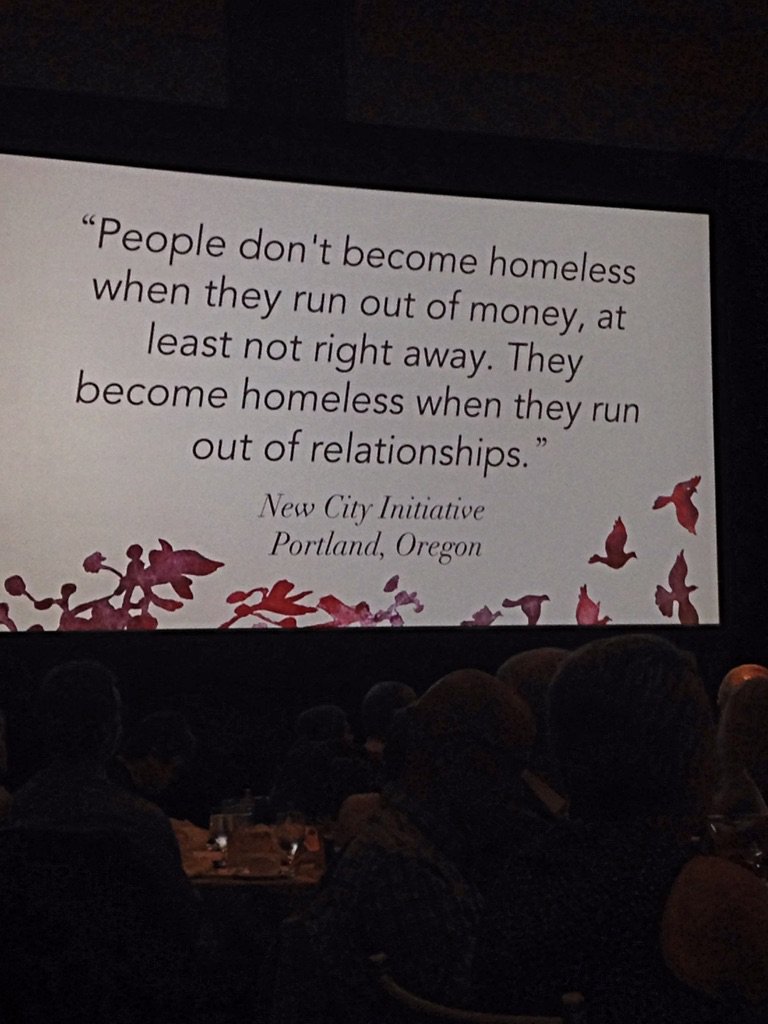
I love this quote that is often spoken of at Mel Trotter Ministries – “People don’t become homeless when they run out of money. They become homeless when they run out of relationships.”

That is our job.

Being those relationships for the most vulnerable.

Not just “one-way relationships” but truly reaching out in community in a sustainable way.

Keep up the good work Patrick, Angie, Taylor and Team at B&G Club! B&G Club would love to partner with you if you want to learn more about the work they are doing in our community. I encourage you to check out their website.

Questions? Comments?

email: Jeshua@dwlawpc.com

http://www.dwlawpc.com

Twitter: @JeshuaTLauka

New Rent Control Law is Trending in Places like California & Oregon, but is it a Proper Response to an Affordable Housing Crisis?

Last month California announced that in order to combat a staggering growth in homelessness it will implement rent control laws effective January 1, 2020.

Ghent, Belgium

According to Market Watch:

The law limits rent increases to 5% each year plus inflation until Jan. 1, 2030. It bans landlords from evicting people for no reason, meaning they could not kick people out so they can raise the rent for a new tenant. And while the law doesn’t take effect until Jan. 1, it would apply to rent increases on or after March 15, 2019, to prevent landlords from raising rents just before the caps go into place.

Michigan’s Affordable Housing Crisis

California’s new law, as well as Oregon’s passage of the Rent Control Bill, and demands for other measures in Boston, is in response to an Affordable Housing Crisis that we have been experiencing across the U.S.

In fact, over two years ago a Rent Control Bill was introduced in the Michigan House of Representatives- you can check out my post on that here

That Bill made no traction. It died in the Local Government Committee.

The Bill was most certainly a response to Michigan’s Affordable Housing Crisis.

It has been several yeas since the Grand Rapids Chamber hosted an Issue Summit on the Housing Crisis in Grand Rapids.

The Summit brought speakers representing many community stakeholders, including representatives from Grand Rapids Urban League,Rockford ConstructionICCFMSHDA, and many local non-profits, including Mel Trotter MinistriesHQHeartside Ministries, on the lack of affordable housing, what is as Mayor Bliss emphasized, admittedly, “a complex issue”.

I have previously offered my own perspective, both as a lawyer representing real estate developers/investors, and as Board Chairman at Mel Trotter Ministries.

Private and Public Community Stakeholders Doing Their Part

A few years have gone by since Kent County was first acknowledged to have an affordable housing crisis. The crisis is still present. There many community stakeholders that are actively playing a role in being part of the solution: providing housing for the most vulnerable. I think of a company like Urbaneer and Bruce Thompson and applaud Bruce for his work. We need more companies like Urbaneer – providing innovative solutions to a housing crisis.

I also think of the non-profit sector – organizations like ICCF and Mel Trotter Ministries finding unique ways through social enterprise to house the most vulnerable.

Kent County has provided several unique tools, including the Eviction Prevention Program.

I don’t think rent control is the answer.

I believe we all have a role to play.

We should all ask ourselves: Am I working to build a better community?

E-mail: Jeshua@dwlawpc.com

www.dwlawpc.com

Twitter: @JeshuaTLauka

Fintech Charters No More?

Good morning, all. It is Tuesday in Grand Rapids. Just last week I was in Belgium and snapped some photos of the beautiful city of Ghent, here is one of my favorite.

Ghent, Belgium

Last year I posted that the Office of the Comptroller of the Currency (OCC) announced it will begin accepting applications for national bank charters from fintech companies In July 2018.

Joseph M. Ottin, Comptroller of the Currency gave the following remarks concerning Fintech Companies:

“The federal banking system must continue to evolve and embrace innovation to meet the changing customer needs and serve as a source of strength for the nation’s economy,” 

Mr. Ottin also commented that accepting applications from Fintech Companies:

helps provide more choices to consumers and businesses, and creates greater opportunity for companies that want to provide banking services in America.”

You can read the full press release here.

Fintech recap…

The prior OCC, Thomas Curry announced in 2017 that OCC would move forward with considering applications from financial technology (fintech) companies to become special purpose national banks.

“The OCC published a paper discussing the issues and conditions that the agency will consider in granting special purpose national bank charters.” You can check that paper out here

What’s made clear from the press release is that “[e]very application will be evaluated on its unique facts and circumstances.

Fintech Charter: Praise, Debate, Criticism and a Lawsuit.

The propriety of a Fintech charter has been supported by the Fintech community in general.

As previously reported by Crowdfund InsiderBrian Peters, Executive Director of Financial Innovation Now  “a public policy coalition comprised of Amazon, Apple, Google, Intuit and PayPal” stated;

“FIN believes that payments and lending regulation needs streamlining for the modern era. We commend the

OCC’s leadership and vision in driving this regulatory discussion. The OCC has rightly concluded that its approach must evolve to ensure that all American consumers and small businesses are empowered with better access to the benefits of financial technology.”

According to Crowdfund Insider  “Fintech Charter could benefit innovative financial firms that can provide superior services at a lower cost for both consumers and businesses.”

That being said, the propriety of such action by the OCC has been questioned by others, and officially sued by the Conference of State Bank Supervisors as an “unprecedented, unlawful expansion of the chartering authority”- check out the Press Release from the CSBS back in April of last year.

Fintech Charters Overturned by Federal Court.

Well it appears a federal court recently sided with the CSBS. I recently read an article by Attorney Daniel S. Cohen from K&L Gates informing that a Federal Court struck down the Fintech Charter.

Why Fintech Intrigues me – Purpose Driven.

Regardless of how the appellate courts ultimately rule on Fintech Charters, I’ve previously talked about why fintech is so intriguing.

I’ve highlighted some fintech companies doing unique things in the past, like Lemonade.

a. taking a risk doing something different (being an innovator);

b. disrupting business as usual;

c. for the good of others (being mission driven).

That’s social entrepreneurship at its finest.

Questions? Comments?

e-mail: Jeshua@dwlawpc.com

http://www.dwlawpc.com

Twitter: @JeshuaTLauka

Real Estate Law Update: Published Court Case: the Scope of a Construction Lien and consequential damages.

I took this photo today – flags at half mast in downtown Grand Rapids.

I will #NeverForget where I was – at the cafeteria in McDonel Hall @michiganstateu watching the horror on the T.V.

Thank you all who gave their lives and prayers to all who lost loved ones 18 years ago today.

Flags at half mast outside of DeVos Place, Downtown Grand Rapids, Michigan

Yesterday a published court decision came out that affects the scope of a construction lien. Check out TSP Services, Inc. v National Standard Company, et al

Update: On September 17, 2019 the Court Vacated its Prior decision and issued a new decision – see here

This case involves a breach of contract claim and a construction lien foreclosure claim.

The case went to arbitration and, according to the Opinion, “the arbitrator approved a lien for $782,469.05, which is $641,386.05 greater than the unpaid balance under the contract.” –

Wow!

The very first page of the Opinion gives you much of the information you need to know to understand the holding:

” Michigan law limits a construction lien to the amount of the contract less any payment already made. Although a party suing for breach of contract might recover consequential damages beyond the monetary value of the contract itself, those consequential damages cannot be subject to a construction lien. “

The construction lien act provides: “Each contractor, subcontractor, supplier, or laborer who provides an improvement to real property has a construction lien upon the interest of the owner or lessee who contracted for the improvement to the real property.” MCL 570.1107(1).

“A construction lien acquired pursuant to this act shall not exceed the amount of the lien claimant’s contract less payments made on the contract.” MCL 570.1107(1)

“Michigan’s construction lien act authorizes a lien up to the unpaid balance of the amount contracted. A lien that includes an amount for consequential damages flowing from, but otherwise outside of the four corners of the contract, exceeds the authorized amount of the act. “

To summarize – consequential damages are not allowable under a construction lien.

consequential damages are a permissible damage under contract law – but you won’t get them added to your lien to foreclose on. You will need to find some other way to recover under a judgment.

A good question to ask: what happens if you file a lien and indicate too much?  Is your lien void? Typically. no.

In order to void a construction lien that is filed in an excessive amount a showing of bad faith is required.  Tempo Inc v Rapid Elec Sales & Services, Inc, 132 Mich App 93; 347 NW2d 728 (Mich Ct App 1984).  “A lien is not lost because the amount claimed is excessive, unless the claim was made in bad faith. In such instances, the proper remedy is to reduce the amount of the lien to the correct amount.” Id

Questions? Comments?

e-mail: Jeshua@dwlawpc.com

Twitter: @JeshuaTLauka

http://www.dwlawpc.com

Business Law Update: Business Owners: Bill Would Restrict Non-Competition Agreements with Employees.

Cedarville, Michigan

I hope you all had a great Labor Day Weekend. I spent the long holiday weekend with my family in Michigan’s Upper Peninsula.

On September 4, 2019, Senate Bill 0483 was introduced in the Michigan Senate.

If passed it would limit the enforceability of a non-competition agreement signed between an employer and an employee.

In my opinion – in some pretty significant ways.

I have spent several articles discussing the legal consequences/enforceability issues of non-competes.

It appears the Legislature is wrestling with the question posed by Nick Manes previously with MIBiz in an article a few years back: “Are noncompetes a barrier to growth?

You can check out the text of the bill here

The Bill was referred to the committee on Government Operations.

The Bill has a few key components to it:

1. Require Employers to follow a Specific Procedure prior to executing a non-compete.

The Bill would only permit Employers to execute a non-competition agreement if the Employer followed a procedure intended to notify the Employee of the requirement of signing a non-compete as a condition of employment.

(A) INFORMED THE PROSPECTIVE EMPLOYEE IN WRITING OF THE REQUIREMENT AT OR BEFORE THE TIME OF THE INITIAL OFFER OF EMPLOYMENT.

Questions? Comments?

e-mail: Jeshua@dwlawpc.com

Twitter: @JeshuaTLauka

http://www.dwlawpc.com

(A) Informed the prospective employee in writing of the requirement or before the time of the initial offer of employment;

(B) Disclose the Terms of the Non-Compete in writing; and

(C) Post the Text of the Law at the Worksite in a CONSPICUOUS LOCATION

2. Non-Compete unenforceable if the Employee is a “low wage” worker.

Defined generally as $15.00/hr or $31,000 annually.

3. Voids Certain Provisions in a Non-Compete – shifts the burden to Employer.

The Bill also has some teeth in it for Employees, including:

  1. Prohibits an Employer from including a clause that states a different state’s laws control the Agreement – this would be an obvious attempt to circumvent the prohibition of non-compete against “low wage” workers;
  2. Gives the Attorney General power to prosecute a violation of the Act;
  3. Automatically places the Burden on the Employer to prove that the Non-Compete was reasonable, as to “scope, duration, time limit.”
    1. Moreover, if a Court limits the non-compete in any respect, the employee is entitled to recover attorney fees.

Wow. This bill has a lot of bite to it – particularly the fee shifting mechanism if a court limits a non-compete in any respect. My first thoughts – if this Bill does come out of Committee, I can’t imagine it will look the same as its current version.

I understand the legislature’s interest in protecting “low wage workers” from unreasonable restrictions. Check out my prior post on the subject of Jimmy John’s non-competes.

However, in my opinion the restrictions as written places an enormous burden on the employer to narrowly tailor the non-compete, to a judge’s definition of “reasonableness”. Otherwise, like I said, the fee shifting provision is a huge penalty.

Questions? Comments?

e-mail: Jeshua@dwlawpc.com

Twitter: @JeshuaTLauka
http://www.dwlawpc.com

For the benefit of all stakeholders – Pushing the Needle Forward on Business as a Force for Good.

Good afternoon, all. I hope you all have been enjoying the summer. I took this photo this morning as the sun was rising over downtown Grand Rapids.

Just a few days ago Business Roundtable announced the release of a new Statement on the Purpose of a Corporation signed by 181 CEOs who commit to lead their companies for the benefit of all stakeholders – customers, employees, suppliers, communities and shareholders.”

Thanks to Jeff Van Winkle for bringing this to my attention. You can check out the link to the Business Roundtable webiste and the announcement: https://lnkd.in/eYSTrxg

It is exciting to see the general acknowledgment and support for the idea that business exists for a purpose more than simply profit.

This is not a new thing, particularly in West Michigan.

West Michigan is truly a unique place where business and philanthropy intersect unlike any other place.  Giving of time, talents and treasure to worthy causes is embedded in the culture of this community.

We know of many businesses that have established core mission statements of social good as something beyond profit for quite some time. I look to Cascade Engineering, as one example. Check out the Blog of Fred Keller, Founder of Cascade – titled “Purpose & Profit”

Some groups are skeptical that this statement will lead to any real change – case in point Corporate America Says “Sorry” via @npquarterly

However, I am hopeful that this statement pushes the ball forward on business for good in the State of Michigan.

BCorps?

Last year the State House tantalized social entrepreneurs, once again, with the possibility of benefit corporations (“Bcorps”) becoming a viable legal option to do business in the State of Michigan.

House Bills 5867, 5868 & 5869 were introduced on April 24, 2018, that would allow BCorps to be formed under Michigan Law.

There was never any movement on those bills and they died in committee.

Back almost two years ago the legislature proposed similar legislation which also died in committee (are you recognizing a pattern?). For a review of the Former BCorp Bills, the House Fiscal Agency issued a Fiscal Analysis, check it out here. 

The Analysis provides good background on what the legislation would do. This is helpful for those who are not overly familiar with BCorps in general.

Education on the “why” for BCorps.

Interested groups and local politicians have been educating the public on why BCorp laws would be a good thing for our state.

State Rep Hank Vaupe gave a discussion to a local chamber group on B-Corps two Septembers ago:

As Rep. Vaupe indicated “benefit corporations provide an opportunity for businesses to use the markets, rather than traditional charity giving, to advance their philanthropic missions.”

Michigan is behind the ball.

Over the last several years Michigan legislators have repeatedly introduced BCorp legislation – to no avail.

Check out this handout from Rep Barnett almost 10 years ago in support of the BCorp legislation he proposed in September 2010.

I found particularly interesting the very last section – it provides some comment on why some Michigan businesses may have been averse to the introduction of BCorp legislation. Feel free to read it and reach your own conclusions.

Michigan now ranks as one of the vast minority of states that has not enacted benefit corporation legislation.

Check out the Benefit Corporation website for a state by state legislative analysis.

I hope Michigan can continue to make progress and recognize business as a force for good.

Questions? Comments?

Jeshua@dwlawpc.com

http://www.dwlawpc.com

Connect with me on Twitter: @JeshuaTLauka

Michigan Legal Update for Real Estate Investors: What Happens to a Surplus after Foreclosure Sale?

Summer is going fast.

I read a  Court of Appeals decision that prompted me to write on the topic concerning real estate investors.

The market to purchase distressed real estate has become extremely competitive since 2008-09. Having multiple real estate investors bidding on properties can cause some serious problems. 

Some lenders/investors have tried some creative methods of recovery and made some interesting legal arguments in order to  maximize their profit at or after foreclosure sales. Complex legal issues can arise in a competitive market when there is money to be made.

For clients of mine that purchase investment real estate at foreclosure – an interesting situation can come up:

  1. Purchaser at foreclosure knows the bidding is competitive – is the highest bidder – overbids due to competitive bids.
  2. Purchaser, in order to “pocket” the overbid (and to extinguish the mortgagor’s right of redemption) – purchases the homeowner (mortgagor’s) interest via quitclaim deed prior to foreclosure and thereafter.
  3. The Sheriff conducting the sale receives and deposits the surplus with the County Treasurer.
  4. Purchaser seeks from the County Treasurer the overbid amount after the foreclosed debt is satisfied.

Facts of May 21 Decision in BAER CO v Specialized Loan Services

That’s presumably what the Plaintiff, purchaser expected to happen in this case.

With real estate, however, things don’t always go how you expect.

This case is helpful, because it provides some guidance to an area of the law that isn’t used very often and there simply isn’t a lot of case law about: what happens to surplus funds after foreclosure and who is entitled to those funds?

This case arises out of the foreclosure sale of property located in Grand Rapids, Michigan (the property). The original property owner took out a mortgage on the property, and he died approximately eleven years later. The mortgage was assigned to respondent SLS, and in the meantime, petitioner BAERE purchased the property via quit claim deed from the original property owner’s son. The mortgage eventually fell into default, whereupon respondent initiated a foreclosure by advertisement. As of the day of the foreclosure sale, the amount of the indebtedness on the mortgage was $51,915.75. Respondent made an initial bid of $20,300. The successful bidder, non-party RDG New Homes, LLC, bid $50,000. with $162,497.12 remaining owed. Id.

After the proceeds from the sale of the Property to Purchaser satisfied the first mortgage the Sheriff received and deposited the $77,490.54 in surplus funds with the St. Clair County Treasurer.

Purchaser filed a document with the Treasurer, “document titled “Verified Claim for Turn-Over of Proceeds of Sale.” seeking payment of the $77,490.54 surplus funds.

Defendant, the junior mortgage servicer, filed a competing document titled “Verified Claim for Surplus Proceeds of Sale

The result was that the funds were turned over to the Circuit Court for the proper disposition. The Court found Defendant, as junior mortgage holder, the proper party. Plaintiff appealed. A few interesting points to discuss came out of this case.

Law:

There are a couple of particular laws that come into play here:

I. Full Credit Bid

One general one to be aware of – the Full Credit Bid Rule – it basically stands for the proposition that: “An overbid at a Sheriff’s sale extinguishes the entire debt.” Pulleyblank v. Cape, 179 Mich.App. 690, 446 N.W.2d 345 (1989) (per curiam).

Practically speaking, if the bank bid the entire amount that was owed, regardless of whether or not the fair market value of the property is worth less than what is owed, the bank cannot come after the borrower for a deficiency.

II. MCL 600.3252 – Surplus Funds After Foreclosure. 

That statute states in relevant part:

If after any sale of real estate…there shall remain in the hands of the officer…making the sale, any surplus money after satisfying the mortgage on which the real estate was sold, and payment of the costs and expenses of the foreclosure and sale, the surplus shall be paid over by the officer…to the mortgagor…or assigns, unless at the time of the sale, or before the surplus shall be so paid over, some claimant or claimants, shall file with the person so making the sale, a claim…in which case the person so making the sale, shall forthwith upon receiving the claim, pay the surplus to, and file the written claim with the clerk of the circuit court of the county in which the sale is so made…

So, the mortgagor is entitled to receive the funds from the Sheriff – or if sent to the Court, an interested party making a “claim” to the funds may make a claim to the Court.

“The statute allows both (1) parties who filed a “claim” with the person making the sale, and (2) any person or persons interested in the surplus, to apply to the circuit court for distribution of the surplus funds after a foreclosure sale.” Id. page 10.

a. Mortgagor – “demand” v.s “claim” – all the same?

One of the primary issues on appeal concerns whether the Purchaser’s filing qualified as a “demand” or as a “claim” under MCL 600.3252. Plaintiff filed with the Treasurer a  document and did not use the word “demand.”

The Court held that, “because plaintiff conveyed to the Treasurer its assertion of its right to disbursement of the surplus funds, we conclude that plaintiff made a “demand” for purposes of MCL 600.3252.” Id. page 7

b.  Mortgagor’s demand needs to be “immediately” paid?

Purchaser argued that the Sheriff should have paid “immediately upon demand” and disregarded the junior mortgage holder. Basically a “you snooze you lose” argument.

The Court was not convinced, holding:

“Although plaintiff makes a valid point that an obligation to make payment “on demand”
generally requires immediacy, the specific facts of this case support the trial court’s ruling that the Treasurer was justified in delaying payment for seven days while it conducted its due diligence in evaluating plaintiff’s filing.” Id. Page 10.

In summary – if you are a Purchaser at foreclosure and have obtained the “mortgagor’s” rights – be careful to search the title for competing claims to that money.

You can’t rely on the fact that you immediately demand the funds to ultimately entitle you to them.

Questions? Comments?

E-mail: Jeshua@dwlawpc.com

http://www.dwlawpc.com

Twitter: @JeshuaTLauka

Michigan Business Law Update on Bill that would allow LLCs to evict tenants without Attorneys. Despite Opposition, Bill Moves Forward.

Happy Friday!

It is summer – my favorite time of year. There really is no better place to be during summer than Michigan. I hope you are all enjoying it.

For those keeping track of House Bill 4509  proposed on April 25, 2019 that would allow some LLCs to evict tenants in limited circumstances without attorneys the Bill was dealt recent opposition from the State Bar of Michigan’s Real Property Section.

On May 15, 2019, The Real Property Section voted 16-0 (one abstaining) against the Bill.

The rationale given by the Section:

” HB4509 essentially creates a small claims type of case for landlord-tenant disputes by removing the requirement that LLCs be represented by attorneys in landlord-tenant proceedings for certain 1- or 2-member LLCs; the legislation is problematic for tenants and courts, as it would be difficult to ascertain whether an LLC meets the requirements set forth in the bill; and, further, the proposed legislation opens the door for unscrupulous landlords and property managers, who may have experience with court procedures but are not held to the same ethical rules as attorneys, to represent their LLCs and potentially take advantage of tenants, many of whom are not represented by counsel and are unfamiliar with court procedures

Despite this opposition, the Bill keeps moving forward.

On June 4, the Bill reported out of the Judiciary committee without an amendment. The Bill was passed by the House by a contested margin – 62-47. It is now sitting in the Senate Judiciary and Public Safety Committee.

It will be interesting to me if the comments of the section will prompt a proposed amendment from the Senate committee to attempt to address some of the valid concerns raised by the section.

I’ve been in enough courtrooms watching nonlawyers representing themselves on both sides – landlord and tenant – to know that the section’s concerns are valid. There is a reason lawyers need to be licensed in order to practice law.

As the saying goes – he who is his own lawyer has a fool for a client...

Questions? Comments?

e-mail: Jeshua@dwlawpc.com

http://www.dwlawpc.com

Twitter: @JeshuaTLauka