Lesson for Businesses: “Words Matter.” Court of Appeals Reverses in favor of Bank of America.

Words Matter.

Contracts are about risk allocation.

In a transaction, who bears what risk?

Back in April I posted on a recent Supreme Court case – Bank of America v First American Title, et. al.

If you recall, that case involved allegations of mortgage fraud perpetrated against BOA to the tune of millions of dollars.

About that Post…

One of the primary issues the Supreme Court was tasked to consider was the legal significance of the closing protection letter (CPL) signed by the Title Company conducting the closing.

Closing Protection Letters.

As the Supreme Court explained, A CPL “is a contract between the title company and the lender whereby the title insurance company agrees to indemnify the lender for any losses caused by the failure of the title agent to follow the lender’s closing instructions.” Id pg 37.

“[a] lender who also wants the title insurer to be responsible for the agent’s acts in connection with escrow closing activities and services must separately contract with the title insurer for such additional protection by entering into an ‘insured closing letter’ or ‘closing protection letter.” Id.

Its About Risk allocation.

Who should bear the risk of a lender’s losses for failure of a title agent to follow the lender’s closing instructions?

In BOA’s case, it was on the hook for a huge loss and wanted to point to the Title Company and say “you should have caught that fraud, you must indemnify me!”

Words Matter.

The Court made a distinction between the inclusion of the word “in” in the CPL in the prior case, and the “exclusion” of the word “in” in the instant case. In the Court’s determination:

“Although the distinction is slight—the only difference is the word “in”—the distinction is legally significant.” Id. page 43.

“[i]f the word ‘in’ is not included, as is the case here, the phrase ‘handling your funds or documents in connection with . . . closings’ simply defines or identifies the closing agent,effectively broadening the indemnification coverage to any acts of fraud or dishonesty by the closing agent related to a closing.” In light of this distinction, the fraud or dishonesty by Westminster or Patriot need not be tied to their handling of Bank of America’s funds or documents.” Bank of Am. v. First Am. Title Ins. Co.id. at page *44 (Mich. Apr. 13, 2016)

Moving on to the Recent BOA Decision…

A few days ago the Michigan Court of Appeals came out with the a related decision in BOA v Fidelity. You can check out the full opinion of BOA v Fidelity National Title.

Similar circumstances as the BOA v FATC case. BOA had alleged mortgage fraud and Fidelity and its affiliates should indemnify BOA for its losses under the CPL.

Words Matter.

The Court of Appeals relied on the Supreme Court in reversing FNT.

In its decision, the Court cited the Supreme Court decision (profusely).

It relied on the Supreme Court’s determination of the CPL’s language (excluding the word “in” as discussed above).

The Court of Appeals reversed the Trial court’s decision in favor of the FNT. It held that  “there is evidence establishing a genuine issue of material fact concerning whether BOA suffered actual loss arising out of the fraud or dishonesty of FTC in handling BOA’s funds….”

Interestingly, the Court goes in great detail to analyze the evidence that supports the allegations of “fraud or dishonesty” against FNT.

Lesson (You get the theme):

Words matter! As the Supreme Court opined – one word can be “legally significant.” It could determine liability for millions of dollars…

In the recent BOA case BOA was on the hook for its losses, and all of FNT’s attorney fees. That judgment was vacated and sent back for trial, based upon the language of the CPL.

Questions? 

Comments?

e-mail: Jeshua@dwlawpc.com

www.dwlawpc.com

Twitter: @JeshuaTLauka

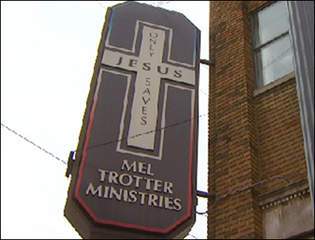
Lessons of Grace Found at Mel Trotter Ministries.

mel-trotter-ministries-1122_20111229171415_320_240If you’re reading this post you may be aware that one of the “hats I wear” is Board Chair at Mel Trotter Ministries (“MTM”).

Yesterday I was at MTM for a “Meet the Mission Luncheon” – our board and staff extend regular invitations to business/community leaders, churches, and anyone interested in learning about what we do MTM on a daily basis.

A standing invitation from me – join me for lunch.

Thank you for those who have joined me over the years for these luncheons.

The greatest part of these luncheons isn’t hearing about the programs, or the way MTM is collaborating and partnering with other agencies and non-profits, or taking the tours (although if you haven’t toured MTM, you really should, especially our family shelter on the 3rd and 4th floor).

The greatest part about the luncheons is hearing the life stories from our guests. Our guest share their stories of struggle with homelessness, addiction, and hunger…and of life transformation.

Yesterday, a former guest of MTM shared her story. Her story included her battle with addiction. She openly shared about her experience at MTM. In particular, she had this to say:

I have been working on understanding grace and that I can turn to Him [God] in the midst of my flaws and brokenness. I never used to feel like that and it always kept me at an arm’s length from Him, because I’m never perfect.  I still struggle with that, but I’m getting closer to really understanding the reality of grace.

That is truth.

We all have flaws. We all are broken.

We all need grace.

I am thankful that people struggling with addiction, homelessness, hunger are finding God’s grace at Mel Trotter Ministries.


West Michigan and its Thriving Culture of Social Entrepreneurship

Today I read an article by MLIVE  titled “Michigan Companies could act like non-profits under proposed law” commenting on Michigan’s new Benefit Corporation Legislation – I posted about the new BCorp Legislation a week ago

Something caught my attention in this article:

in Michigan, the biggest concentration of the B-Corp businesses are in the Grand Rapids area, where there are 11 — twice as many as in Metro Detroit

this list  of “B Certified” companies includes Cascade Engineering, The Image Shoppe, & 616 Development, among others.  A real estate development that is socially minded – cool!

It isn’t surprising to me that Grand Rapids, one of the most philanthropic cities in the U.S. is a generator of social entrepreneurs.

With all the exciting development in Detroit, especially with events like Detroit Startup Week, I expect in time to see Detroit sky rocket in the number of bcorps and social entrepreneurs.

e-mail: Jeshua@dwlawpc.com

http://www.dwlawpc.com

Twitter: @JeshuaTLauka

Jimmy John’s Sued over Non-Competition Agreements

Happy Friday!

Today’s headline in the ABAJournal:  Illinois attorney general sues Jimmy John’s over noncompete clauses for low-wage workers

Yikes.

A few years ago I posted on this issue

According to the ABAJournal:

Illinois Attorney General Lisa Madigan claims in a lawsuit that Jimmy John’s sandwich restaurants are violating state law by requiring low-wage workers to sign restrictive noncompete agreements.

Apparently, according to the lawsuit, Jimmy Johns had indicated it no longer required employees to sign the non-competes, but it later never implemented this plan.

Yikes.

In Michigan, Non-Competes are enforceable to protect legitimate business interests.

MCL 445.774a provides:

“1) An employer may obtain from an employee an agreement or covenant which protects an employer’s reasonable competitive business interests…”

As I stated in my prior post – even if Jimmy John’s non-competes were enforceable – to what end? Why have employees sign them?

I would hate to be the lawyer representing Jimmy John’s to enforce an injunction in Grand Rapids Circuit Court to enjoin an 18-year old from making sandwiches…

e-mail: Jeshua@dwlawpc.com

www.dwlawpc.com

Twitter: @JeshuaTLauka

Michigan Business Law Update: B-Corp Legislation Introduced On May 31st

Just days ago I posted on B-Corps and the Rise of Social Entrepreneurship

Yesterday House Bill 5710 was introduced in the State House. The House Bill is tie barred with HB 5711 and HB 5712

As I’ve previously written,

B-Corps have a dual purpose –

  1. To create profit and
  2. “create a material positive impact on society and the environment”

This Michigan Bill would define a “general public benefit” as:

“A MATERIAL POSITIVE IMPACT ON SOCIETY AND THE ENVIRONMENT, TAKEN AS A WHOLE, AS MEASURED BY A  THIRD-PARTY STANDARD, FROM THE BUSINESS AND OPERATIONS OF A BENEFIT CORPORATION.”

I have yet to review the legislation in any detail, but wanted to put those interested on notice of this latest bill.

B-Corporations and the Rise of Social Entrepreneurship


A few months back I sat on a panel to discuss Non-Profit Sustainability and Social Entrepreneurship. You can check out the video here.

I was asked to provide some comments on B Corps – or Benefit Corporations.

To cover some basics –

B-Corps have a dual purpose –

  1. To create profit and
  2. “create a material positive impact on society and the environment”

B-Corps also impose heightened fiduciary duties on board of directors, require the Board to consider social/environmental consequences for board decisions.

These “heightened fiduciary duties”  is contrasted with the setting of the traditional corporation – where the shareholders appoint the board of directors who make decisions  to maximize profits to the shareholders.


History of B-Corps:

Maryland was the first state to enact B Corp legislation in 2010.

In 2012 – there were 7 states with B Corp legislation enacted.

Today: 31 states (and counting) with B Corp legislation enacted.

Michigan is still not one of those states.

To me, this increase in number of B Corp states acknowledges that millennials and others joining the work force today want to be part of business that does social good.

A question that Michigan legislators must be wrestling with – do we join the trend? Or could allowing for B-Corp formation/conversion, cause a detriment to existing business?

If there is data on that point, I haven’t seen it.


Questions? Comments?

e-mail: Jeshua@dwlawpc.com

http://www.dwlawpc.com

Twitter: @JeshuaTLauka

City of Lansing Settlement Agreement and a Non-Disparagement Clause with a $10k Penalty

I read an article a few days ago about the City Lansing’s Mayor, Virg Bernero and a settlement agreement he apparently negotiated that included a payout that was made, as reported by the Free Press,  “so everybody would be happy.”

What I found interesting was “the settlement agreement signed by Bernero and McIntyre also includes a non-disparagement clause with $10,000 penalties for any comments either side makes harming the reputation and goodwill of the other.”

Would you sign a non-disparagement clause with that big of penalty attached to it?

I’ve previously delved into the topic of non-disparagement clauses.

The above language interests me because the $10,000 penalty is a pretty big stick to deter “disparagement”.  As a lawyer, if I was approving my client’s signature on that agreement, I’d want to be sure that my client understood what constitutes “disparagement” (in the City of Lansing case, the client was a lawyer – and (in my opinion appropriately) responded to inquiries from the press with a “no comment“).

Courts have held that “disparagement” is plain in its meaning. It is not ambiguous. Therefore, when signing a non-disparagement clause you can have some reasonable certainty in your conduct.

For a further discussion on this topic – see below.

1. Non-Disparagement Clauses in Settlement Agreements.

Often times as part of a confidential settlement agreement, the parties to a dispute will agree not to “disparage” each other.

Disparage – as you will see below – has a fairly common meaning.

‘Disparagement’ is ‘a false and injurious statement that discredits or detracts from the reputation of another’s property, product, or business.’ Black’s Law Dictionary (7th ed. 1999).

stated another way:

(1) To speak of in a slighting or disrespectful way; belittle. (2) To reduce esteem or rank.’ . . . American Heritage Dictionary (4th Ed. 2000)

2. Michigan Case Law Concerning “Non-Disparagement Agreements”

Rarely have I ever seen a non-disparagement clause become an issue. In fact, a review of Michigan case law supports this – I found only a handful of cases in Michigan where the parties litigated over one party’s alleged “disparagement” after a settlement agreement was entered.

One such case was the 2011 case of Sohal v. Mich. State Univ. Bd. of Trs. & Davoren Chick M.D., 2011 Mich. App. LEXIS 915, *12-14, 2011 WL 1879728 (Mich. Ct. App. May 17, 2011).

There, Plaintiff,  a participant in MSU’s internal medicine residency program, entered into a “resignation and settlement agreement” with MSU under disputed circumstances. The Agreement contained a “non-disparagement clause”.

Plaintiff sued and argued that Defendants breached the non-disparagement clause, entitling him to “rescind” the Agreement (and therefore sue under all of the laws that he would have otherwise waived).

One of Plaintiff’s arguments was: “the word “non-disparagement” is ambiguous. (If you’ve read my previous post you can understand why this argument does not win the day.)

The Court was not convinced. It held:

“the term “disparage” in the non-disparagement clause is not ambiguous. While plaintiff attempts to ascribe several “reasonable” meanings to the term “disparage,” and thus the non-disparagement clause, the term fairly admits of but one interpretation.” Citing Meagher v Wayne State Univ, 222 Mich App 700, 722; 565 NW2d 401 (1997).

As the Court noted, “Other state courts have determined that the term “disparage” in non-disparagement clauses of settlement agreements are unambiguous.” (citations omitted).

In closing – non-disparagement clauses are standard clauses (but not universally used). Courts have consistently held that “Disparage” is a plainly understood term. It isn’t an ambiguous term.

Questions?  Comments?

e-mail: Jeshua@dwlawpc.com

www.dwlawpc.com

Twitter: @JeshuaTLauka

Startups – Don’t Make this Mistake!

Happy Friday!

A few months back I wrote a post titled Business Startups: Don’t make these mistakes.

I discussed a recent case that highlighted mistakes that business startups can make – including, shutting down a business, then starting a new one just to avoid debts/creditors.

Generally speaking, that doesn’t work!

A May 3rd Cour of appeals decision reiterates this point – and it provides a good explanation of the legal doctrine that holds a successor business entity “liable” for the debts of its predecessor company – we call this legal doctrine the “mere continuation” doctrine.

You can check out the case of Commonwealth Land Title Insurance Co v Metro Title Corp and Metro Equity Services

I. Facts

  • plaintiff filed a lawsuit against Metro Title and Metro Equity Services, asserting that
  • (1) Metro Title formed Metro Equity for the purpose of fraudulently transferring their assets to avoid collection on the  May 2012 default judgment, and
  • (2) Metro Equity was liable for the judgment as a mere continuation of Metro Title under a successor-liability theory.
  • Metro Equity acknowledged that its owner was the owner of Metro Title and Metro Equity, it argued that Metro Equity was not a mere continuation of Metro Title because Metro Equity did not engage in the same business or customer base as Metro Title and Metro Equity did not purchase any of Metro Title’s stock or liabilities.
  • The Trial Court held that Metro was a mere continuation and found it liable. The Court of Appeals affirmed.

II. “MERE CONTINUATION”

The Court stated the law:

“Michigan follows the traditional rule of successor liability. Foster [v Cone-Blanchard Machine Co], 460 Mich [696] at 702[; 597 NW2d 506 (1999)]. Under that rule, the nature of the transaction determines the potential liability of predecessor and successor corporations. Id. “If the acquisition is accomplished by merger, with shares of stock serving as consideration, the successor generally assumes all its predecessor’s liabilities. However, where the purchase is accomplished by an exchange of cash for assets, the successor is not liable for its predecessor’s liabilities unless one of five narrow exceptions applies.” Id. The five exceptions are: (1) an express or implied assumption of liability; (2) de facto -3- consolidation or merger; (3) fraud; (4) transfer lacking in good faith or consideration; or (5) where the transferee corporation was a mere continuation or reincarnation of the old corporation. Id. at 702.”

The Court held that the mere continuation doctrine was applicable in commercial transactions such as this one – and affirmed the trial court’s ruling finding successor liability.

Lesson:

Start up businesses – take advantage of your limited liability protection, but do not think you can avoid your debts simply by starting up a new business entity that is a mere continuation of one you dissolved.

e-mail: Jeshua@dwlawpc.com

www.dwlawpc.com

twitter: @JeshuaTLauka

Michigan Corporations: Maintain your Corporate Formalities and Keep up your Guard.

This morning I received an e-mail reminder from the Michigan Department of Licensing and Regulatory Affairs (LARA)

Corporation owners are reminded that annual filing fees and statements must be filed by May 15, 2016.

“Annual statements and annual reports can be filed online at www.michigan.gov/fileonline 

LARA sent a reminder that failure to file will result in penalties. LARA also sent a reminder as follows:

“section 922(1) of the BCA provides that if a domestic corporation fails to file its annual report and filing fee for two years, the corporation will be automatically dissolved 60 days after the expiration of the 2-year period. Section 922(2) of the BCA provides that if a foreign corporation fails to file its annual report and filing fee for one year, its certificate of authority is subject to revocation 60 days after the expiration of the 1-year period. A corporation that has been automatically dissolved or withdrawn is not entitled to a certificate of good standing, its corporate name will be available for use by another entity, and no document will be filed on behalf of the corporation

Additional information is available on the Corporations Division website atwww.michigan.gov/corporations or by calling the Corporations Division at (517) 241-6470.

I’m glad LARA sends out these reminders. It is important as a business owner to maintain your corporate formalities.

I previously posted on this subject “Lessons for Business Owners – Keep up your Guard

Questions?

Comments?

e-mail: Jeshua@dwlawpc.com

Twitter: @JeshuaTLauka
www.dwlawpc.com